Something wrong right now? If a warning light is red, if the temperature gauge is climbing, if the steering or the brakes feel different from how they felt yesterday, or if you can smell fuel — stop driving and call us. A tow costs less than an engine. We will talk you through whether it is safe to bring it in under its own power before you try. Call 000-000-0000
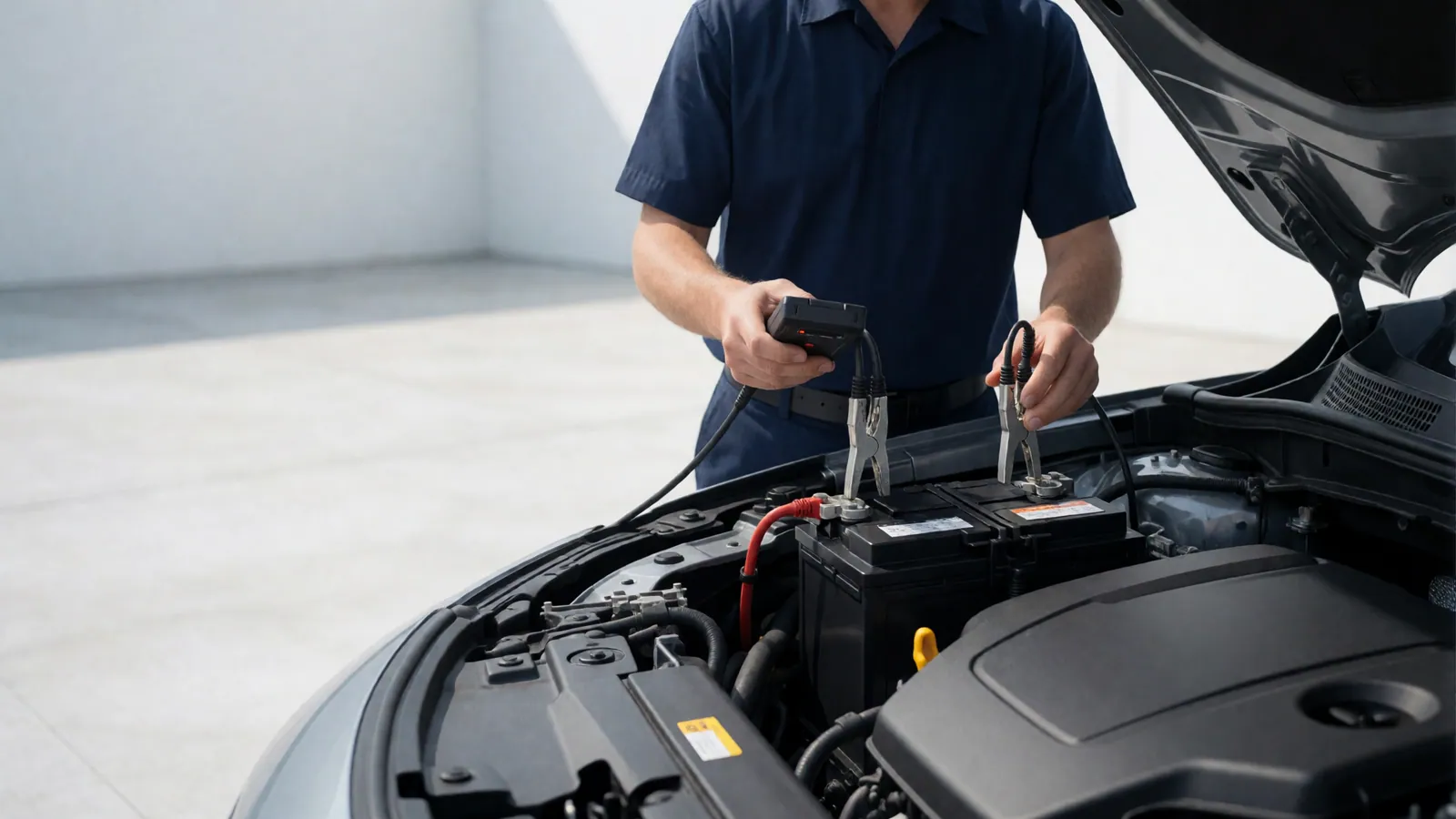
A dead battery in a Woodside driveway on a January morning is rarely a battery that failed suddenly — it is a battery that has been marginal for weeks and finally met a cold night it could not survive. Voltage alone will not tell you that; a battery sitting at 12.4 volts can still fail to crank an engine in freezing weather. We test under load, which is the only test that actually predicts a cold start.
A battery and an alternator are one system, not two separate parts that happen to be wired together. An alternator working slightly too hard because a battery is failing will itself wear out faster, and a new battery installed onto a weak alternator will discharge slowly and fail again within months. Every battery test we run includes the charging system, because testing one without the other answers half a question.
The two weeks either side of the first hard freeze are consistently the busiest of our year, because batteries, coolant and winter tires all fail in the same fortnight and everyone discovers it on the same cold Monday morning — if you suspect your battery is marginal, get it tested in October rather than waiting for November to prove it. Start-stop vehicles need a specific battery type registered to the car's own computer, not a generic replacement, and getting that wrong causes problems that look electrical but are not.
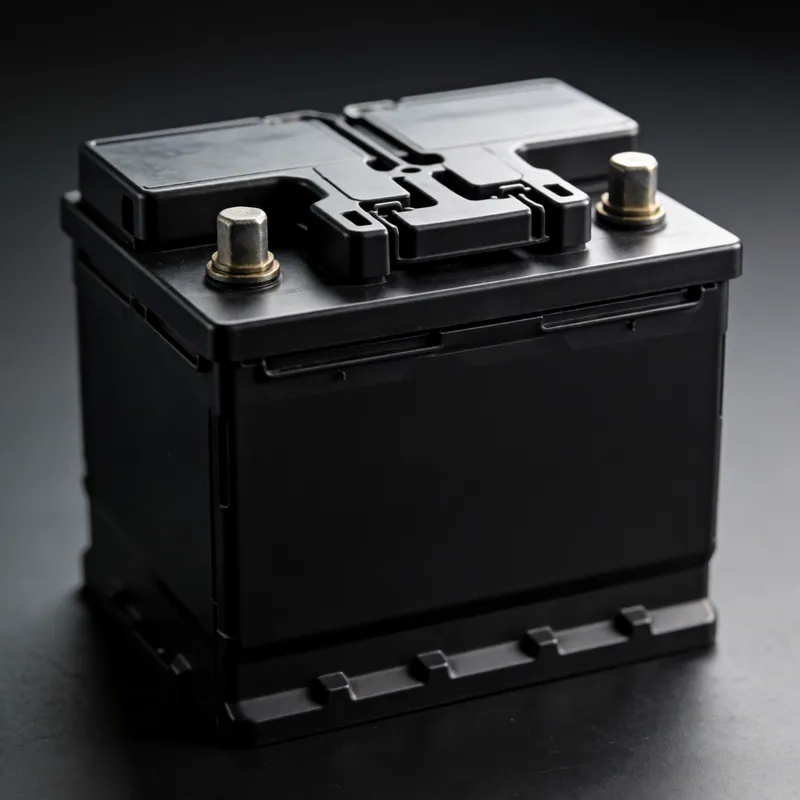
How a real battery test actually works
A voltmeter answers a different question than the one that actually matters on a cold morning.
Load testing, not a voltmeter reading
A voltmeter shows resting voltage, which tells you almost nothing about whether the battery can deliver the current an engine needs on a cold start. A load tester draws current from the battery at a rate that simulates cranking and measures how the voltage holds up under that draw.
Cold cranking amps, checked against the specification
Every battery is rated for a specific cold-cranking-amp figure, and that figure genuinely degrades with age even when the battery still starts the car on a mild day. We check the measured output against the rated figure, not just against whether the engine turned over this morning.
The alternator's output and ripple, not just its voltage
A healthy alternator produces a clean, steady voltage; a failing one can produce the right average voltage with electrical ripple riding on top of it, which slowly cooks a battery without ever showing as a simple low reading. We check for that ripple, not just the headline number.
Terminal and cable condition
Corrosion at a terminal creates resistance that mimics a weak battery or a failing alternator, and it is the cheapest of the three to fix. Cleaned and checked as standard on every test, whether or not the battery itself needs replacing.
Parasitic drain, when the symptom points there
A battery that is fine during the day and dead by morning, repeatedly, is sometimes a component drawing current with the car off — an interior light, an aftermarket accessory, a control module that failed to sleep. We can isolate it with a current-draw test rather than replacing a battery that was never the problem.
Why the alternator and the battery are treated as one system
Replacing one half of a charging system without checking the other half is only ever half the job.
A weak battery overworks a healthy alternator
An alternator forced to constantly recharge a battery that cannot hold a charge runs hotter and harder than it was designed to, and premature alternator failure is a common, avoidable consequence of ignoring a battery that has already been marginal for months.
A weak alternator kills a new battery early
A new battery dropped into a car with a failing alternator will undercharge on every drive, sulfate internally, and fail again within months — at which point it looks like a bad battery when the actual fault was never the battery at all.
Every replacement includes a charging system test afterward
Fitting a new battery without checking that the alternator can actually charge it properly is only half the job. Every battery replacement here ends with a charging system test, included in the $219 price, not billed separately.
Symptoms that point to the alternator, not the battery
Dimming headlights at idle, a battery warning light while driving, electrical accessories behaving oddly, or a battery that keeps needing recharging despite testing healthy — all of these point at the charging side of the system rather than the battery itself.
Cold weather, start-stop systems, and getting the right battery
The wrong battery type or a skipped registration step causes problems that look electrical but started as a parts mismatch.
Why failures cluster around the first hard freeze
Cold thickens engine oil and increases the current needed to crank, at exactly the moment cold temperatures also reduce a battery's ability to deliver current — a battery that started every warm morning without complaint can fail outright on the first genuinely cold one. If you suspect yours is marginal, test it before the freeze rather than after.
Start-stop batteries are a different product, not an upgrade
Vehicles with automatic engine start-stop use enhanced flooded or absorbent glass mat batteries built for far more charge cycles than a conventional battery, and fitting the wrong type causes premature failure and can disable the start-stop function entirely. We match the type your manufacturer specifies, every time.
Registration to the car's computer, not just fitting
Many modern vehicles must have a new battery's specification registered with the car's own computer so the charging system manages it correctly; skip that step and the alternator can undercharge a perfectly good new battery. We register every replacement as a standard part of the job.
Free testing at every visit, not just when you ask
We test your battery and charging system as part of the standard 30-point inspection on every visit, whatever you came in for, so a marginal battery usually gets flagged before it strands you rather than after.
Battery & Charging in western Queens
Batteries tested under real load, not just voltage, because the alternator and the battery are genuinely one system rather than two separate parts.
It starts the same way whatever you are here for: the car goes on a lift, gets a free documented inspection, and you get photographs and a line-by-line price on your phone before anybody picks up a tool. Approve the lines you want. Silence is not approval and never has been.

Questions
Battery & Charging — the questions we are asked most
How much does a car battery cost in Woodside, NY?
$219 for a battery matched to your manufacturer's specification, fitting, terminal service, a full charging system test afterward, and the old battery recycled. Vehicles with automatic engine start-stop need an enhanced type built for far more charge cycles, which is included at the same price — we do not charge extra for fitting the correct battery for your car.
How do you actually test a battery?
Under load, not with a voltmeter. A load tester draws current from the battery at a rate that simulates cranking an engine and measures how the voltage holds up, which is the only test that reliably predicts whether a battery will start your car on a genuinely cold morning. Voltage alone can look completely normal on a battery that is about to fail.
Why does my battery keep dying even though it tests fine?
Two common causes: a charging system that is not fully recharging it on your typical short drives, or a parasitic drain — something drawing current with the car off, such as an interior light or a module that failed to sleep. We can isolate a drain with a current-draw test and check your alternator's actual output rather than just replacing a battery that was never the real problem.
Is it my battery or my alternator?
Often both are involved, because they operate as a single system rather than two independent parts — a weak battery overworks a healthy alternator, and a weak alternator undercharges and prematurely kills a new battery. Dimming headlights at idle, a dashboard battery warning while driving, or a battery that needs repeat recharging despite testing healthy all point toward the alternator. We test the whole system together rather than guessing at one part.
Why do batteries seem to die in winter?
Cold weather does two things at once: it thickens engine oil, which increases the current needed to crank the engine, and it reduces a battery's ability to deliver current in the first place. A battery that started every mild morning without complaint can fail outright on the first hard freeze. The two weeks either side of that first freeze are consistently our busiest of the year — if you suspect yours is marginal, get it tested before the cold arrives.
Does my hybrid or start-stop car need a special battery?
Yes. Vehicles with automatic engine start-stop use enhanced flooded or absorbent glass mat batteries built for far more charge cycles than a conventional battery, and many also require the new battery's specification to be registered with the car's own computer so the charging system manages it correctly. Fitting the wrong type causes early failure and can disable the start-stop function; we match and register the correct type every time.
Is the battery test really free if I do not buy anything?
Yes. Every car gets its battery and charging system tested under load as part of the standard inspection at every visit, whatever you came in for, and there is no charge whether the result is good news or bad. We would rather you knew the real condition of your battery before it strands you than find out only once it has.
What is your warranty on a battery or alternator replacement?
24 months or 24,000 miles on both the part and the labour, whichever comes first, and it stays with the vehicle rather than with you if you sell it. If a battery or alternator we fitted fails inside that window, we test it free and replace it free, without a discussion about whether the part or the fitting was at fault.
Related
Usually booked alongside this
Servicing & Maintenance
Car Service
Manufacturer scheduled maintenance done to the interval that actually matters, with a free 30-point inspection and a written estimate before anything is touched.
Read more
Servicing & Maintenance
Oil Change
Full synthetic oil in the exact grade your manufacturer specifies, a fresh filter, and the same free 30-point inspection on every visit.
Read more
Servicing & Maintenance
Brake Repair
Pads and discs measured and recorded at every visit, brake fluid replaced on schedule, and pricing quoted honestly per axle rather than per shiny part.
Read moreA written estimate with photographs, before any work
Book your car in
Every car that comes in goes on a lift and gets a documented inspection before anything is priced, and that inspection is free. You get photographs of what we found and a line-by-line estimate on your phone, and nothing happens until you reply.