Who is allowed to do this
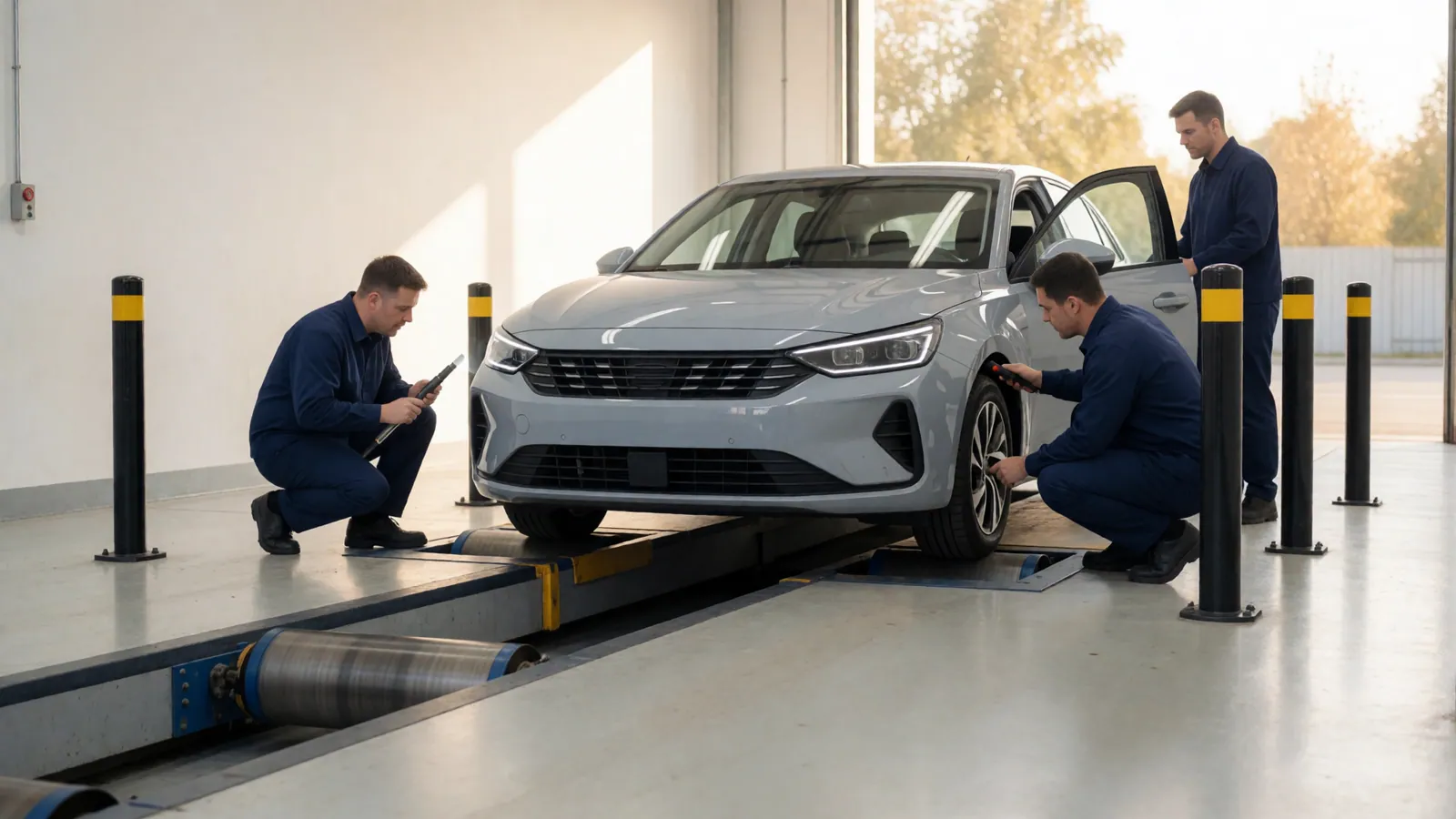
An official inspection station, on 61st Street
New York licenses the station and licenses the inspector separately from it. Ours hold current State inspector qualifications, and the testing equipment is calibrated and checked to the State's own schedule rather than to ours.
$37 is the fee the State sets for a combined safety and emissions inspection, and it is the same $37 whether the car takes ten minutes or an hour. No inspection station, ours included, may lawfully charge more for the inspection itself — what varies between shops is only what happens afterwards, if something fails.
Two inspections, one visit
Safety versus OBD-II emissions — what each one actually covers
The safety inspection
Covers the mechanical condition of the things that let a car stop, steer and be seen: tires, brakes, steering and suspension, lights, wipers, horn, mirrors, windshield and glazing, seatbelts, and the general structural condition of the body.
The OBD-II emissions inspection
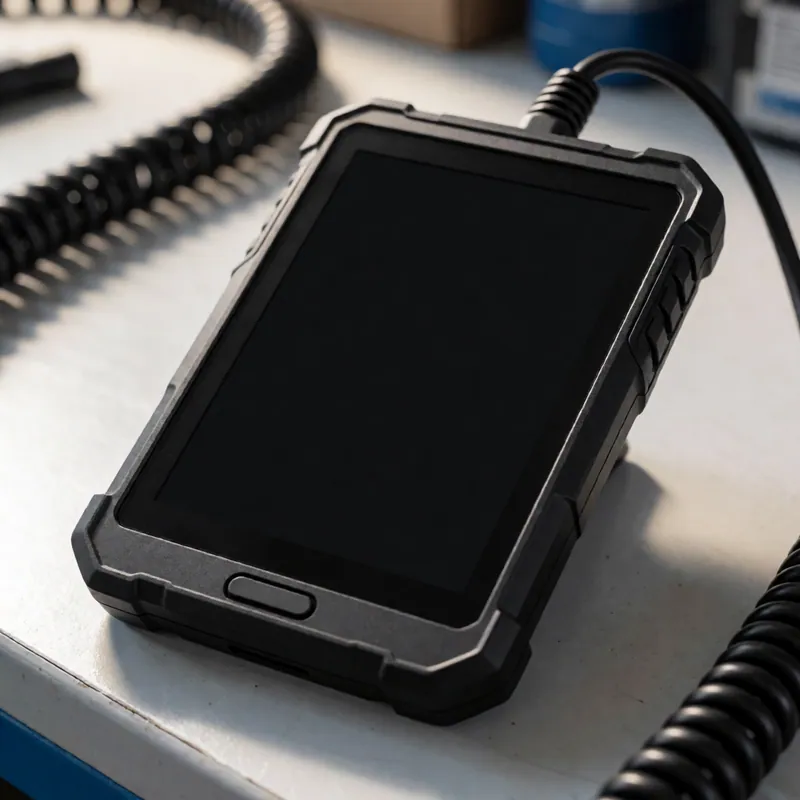
Plugs into the vehicle's onboard diagnostic port rather than testing tailpipe gas directly on most cars built since the mid-1990s. It reads whether the check-engine light is on, whether any emissions-related fault codes are stored, and whether the car's own internal self-tests have run and passed.
Which cars need which
Nearly every gasoline car and light truck needs both parts in the same visit. Diesel, electric and a small number of older or exempt vehicles are tested differently — ask when you book if you are not sure which category your car falls into.
The sticker
The sticker, and what its expiry actually means
The inspection sticker on your windshield states the month it expires, and its background colour changes on a State-wide cycle so an inspector or an officer can tell at a glance, from ten feet away, whether it is current without reading the date.
- A new inspection is due once every twelve months, without exception for low mileage or light use.
- Buying a used car does not extend an inspection that is already current — check the sticker before you drive it away.
- Driving on an expired sticker is a real and separate problem from anything mechanically wrong with the car.
- We will tell you the exact expiry date at the desk without you having to find the sticker yourself.
What actually fails
The most common reasons a car fails inspection here
Tires
Tread worn below the legal minimum, a cut or bulge in the sidewall, or a repair in the wrong part of the tire. This is the single most common failure we see and the cheapest one to have avoided.
Brakes
Pads worn to the wear indicator, a rotor below its minimum thickness, or a hydraulic fault such as a soft pedal, a leak or uneven braking. We measure rather than estimate, and we write the numbers down either way.
Lights
A headlight, brake light, turn signal or license plate light that is out, aimed wrong, or the wrong colour for its position — often a five-minute fix that a driver had genuinely not noticed.
Wipers
Blades that streak, tear or skip rather than clear the glass in a single pass, and a washer system that does not actually deliver fluid to the glass.
Windshield cracks
A crack or chip inside the driver's direct line of sight, or a crack of significant length anywhere in the glass, fails regardless of how long it has been there or how small it started.
The check-engine light
If it is on, the car fails the emissions half automatically, whatever the actual fault turns out to be and however well the car seems to run. There is no partial credit for a light that is illuminated for a trivial reason.
Worn suspension
Play in a ball joint or tie rod end, a leaking shock or strut, or a broken spring, checked on the lift rather than by how the car feels on the road, which is a poor indicator of any of these.
The one nobody expects
Readiness monitors, and why a disconnected battery can fail a healthy car
Your car's computer runs a set of internal self-tests called readiness monitors, covering things like the catalytic converter, the oxygen sensors and the evaporative emissions system. An OBD-II inspection checks whether those monitors have run and passed, not just whether a warning light is on.
Disconnecting the battery, clearing a fault code, or a very recent repair all reset those monitors to not ready, and a car with too many monitors not ready fails the emissions inspection immediately, regardless of how cleanly it actually runs. The fix is not a repair — it is driving the car through its normal range of conditions for a few days so the computer can finish testing itself. If you have just had work done elsewhere, or the battery has just been changed, tell us before we test it; we would rather reschedule you than fail a car that was never actually broken.
If something fails
You may have the work done anywhere you like
A failed inspection produces a rejection notice listing exactly what failed. You are free to take that list to any shop you choose, including one that is not us, and there is no obligation created by having failed here.
Repair it here or elsewhere
Whoever does the work, keep the paperwork. The invoice showing what was replaced is what a re-inspection is checked against.
A free re-check
Return with the repair completed and most stations, ours included, will re-check the failed items at no charge within the short window stated on your rejection notice. Ask at the desk when you collect it, since the exact window is set by the State and is worth confirming rather than assuming.
We will not talk you into extra work to pass
Only the items on the rejection notice need addressing to pass re-inspection. If we find something else while we are in there, that is a separate conversation and a separate estimate, not a condition of passing.
$37, set by the State
Book your inspection in Woodside, NY
Same-day most mornings, and we will tell you before you leave whether anything is close to failing next year rather than let it be a surprise.