Something wrong right now? If a warning light is red, if the temperature gauge is climbing, if the steering or the brakes feel different from how they felt yesterday, or if you can smell fuel — stop driving and call us. A tow costs less than an engine. We will talk you through whether it is safe to bring it in under its own power before you try. Call 000-000-0000
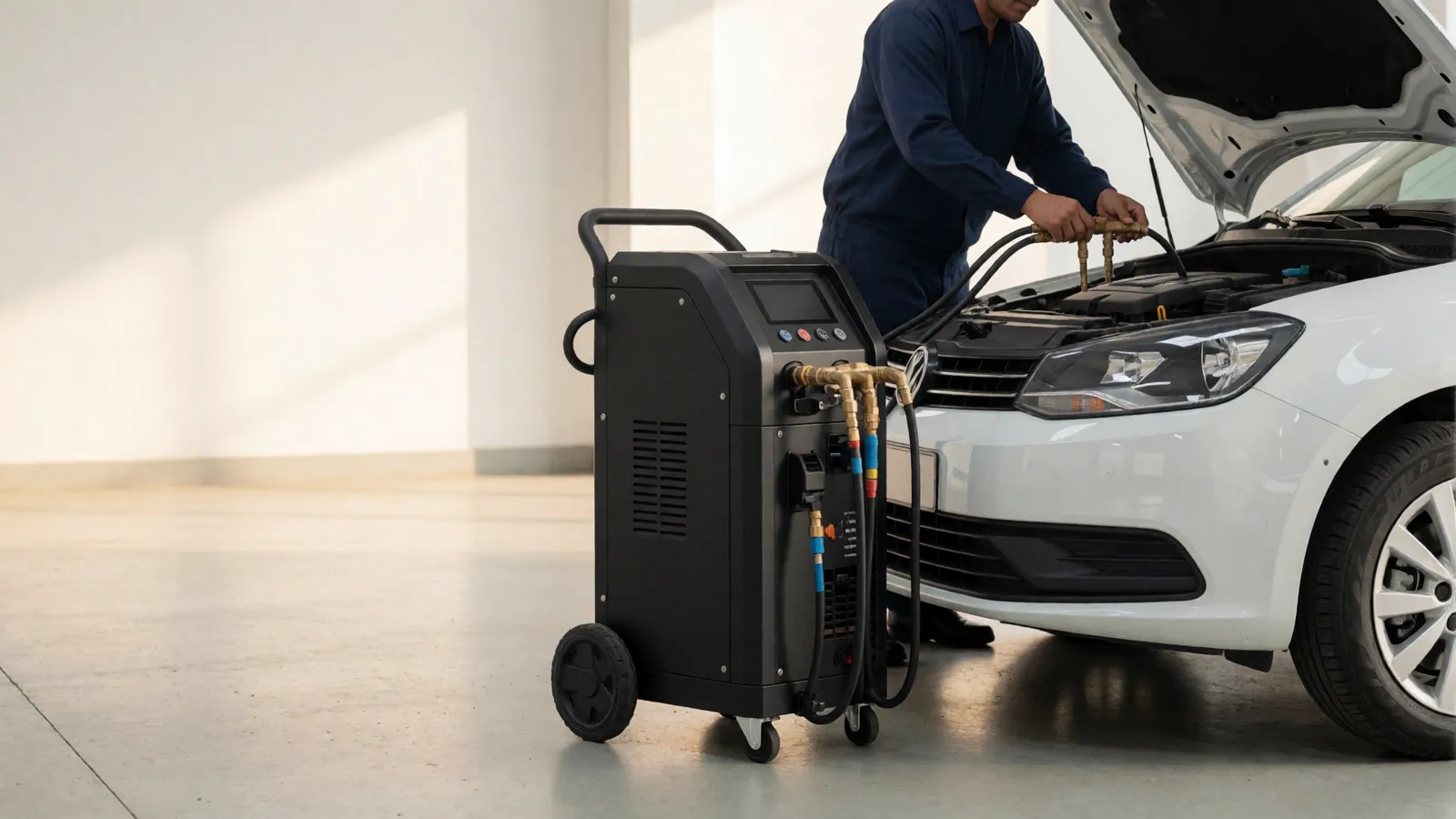
Car AC service in Woodside, NY starts from one fact that a quick top-up conveniently ignores: an air conditioning system is sealed, and a sealed system does not lose refrigerant on its own. If the charge is low, refrigerant has escaped somewhere, which means there is a leak, and recharging without finding it only buys you a few quiet weeks before the same warm air returns. 'Topping up' is not a repair; it is a way of selling you the same job again next summer.
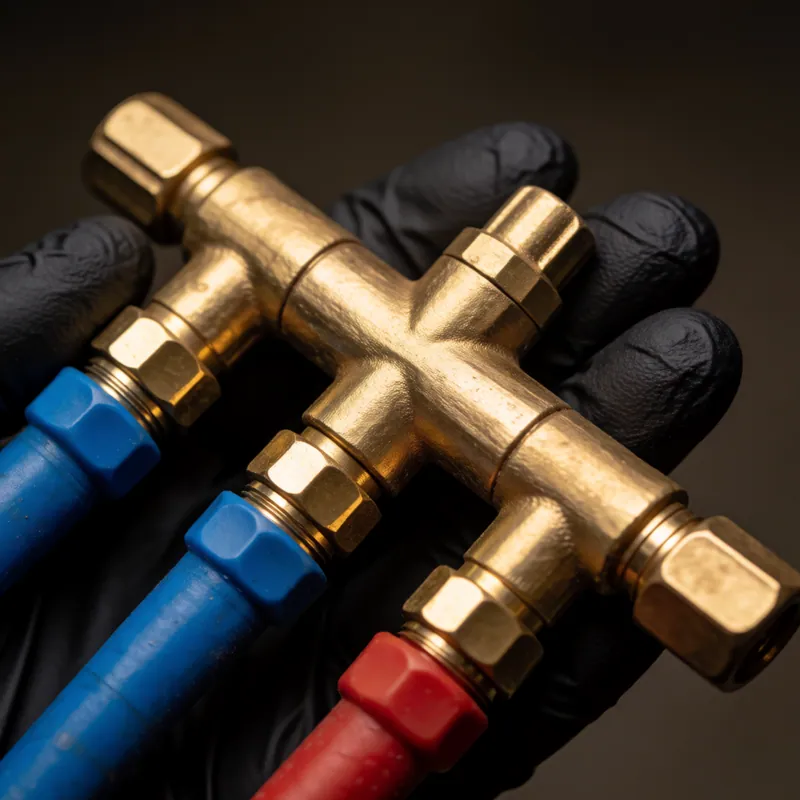
A proper service evacuates the system completely, holds a vacuum to prove there is no leak large enough to let air back in, and recharges to your vehicle's exact factory weight — measured on a scale, not judged by how firm the lines feel. When the fault is an actual leak, we find it with UV dye that fluoresces under a lamp at the exact point of the escape, or with nitrogen pressure testing for a leak too slow for dye to catch in one visit.
A musty smell from the vents is very often the cabin air filter or the evaporator growing mould behind the dash, not the refrigerant at all, and it is worth ruling out before any gas work begins. Refrigerant type affects the cost: older systems use R-134a, while most cars from the last decade use R-1234yf, which costs meaningfully more per pound and needs different service equipment, reflected honestly in the price. Book before the first ninety-degree day — the diary fills within a fortnight of it, same as every year.
Why 'topping up' is not a service
A sealed system does not lose refrigerant on its own, which makes a low charge a symptom rather than routine wear.
A sealed system, by definition
Refrigerant circulates in a closed loop and is not consumed by normal operation the way oil or fuel is. A system reading low on refrigerant has lost it somewhere along that loop, and 'somewhere' is a leak, however small.
What a top-up actually buys you
A few weeks or a season of cold air, and nothing else — the leak that caused the low charge is still there, still leaking, and the refrigerant you just paid for is on its way out through the same hole as the last charge.
The customer who had five recharges in two summers
Somebody had sold this driver five top-ups across two summers before the actual leak was ever found. Nitrogen and UV dye found a pinhole in a condenser that had been leaking the entire time — a new condenser and a proper evacuation and recharge, $640, and the last two summers have been quiet.
Why a real repair costs more up front and less overall
A leak diagnosis and repair costs more than a single top-up, but a single proper repair replaces what five separate top-ups would have cost this same customer, without the five separate afternoons spent bringing the car back in.
What we do instead
Evacuate, vacuum test to confirm the system actually holds a seal, recharge to the exact factory weight, and — if the vacuum test fails — find the leak before recharging anything into a system that will only lose it again.
Evacuate, vacuum-test, recharge — in that order
Three steps that sound simple and that a rushed 'recharge only' service skips at least one of.
Recover and evacuate
The recovery station pulls the existing refrigerant out of the system and weighs it, which is itself useful diagnostic information — a system that had noticeably less than its factory charge in it confirms a leak before any further testing even starts.
Vacuum test
The system is pulled down to a vacuum and left there to see whether it holds. A system with even a small leak will not hold vacuum, which proves there is a leak to find before a single ounce of new refrigerant goes back in.
Recharge to the exact factory weight
Refrigerant is metered back in by weight on a scale to the specific figure your manufacturer publishes for your system, not 'until the gauge looks right' or until the vents feel cold enough to stop. Overcharging a system causes its own problems and is not a safety margin.
UV dye, when the vacuum test fails
A small amount of dye that fluoresces under a UV lamp is added to the system, which is then run for a short period so the dye can travel to the leak and mark it visibly, often at a fitting or a seal invisible to the eye alone.
Nitrogen pressure testing, for slower leaks
Some leaks are too slow for dye to reach and mark within a single visit. Pressurising the system with nitrogen and monitoring for a pressure drop over time finds leaks that a same-day dye test would miss entirely.
Performance test before the car goes back
Vent temperature and pressures are checked against the specification for your system and the outside conditions on the day, not just against whether cold air comes out. A system can blow cold and still be undercharged or overcharged.
The smell, the refrigerant type, and the calendar
Three questions we get asked constantly that have nothing to do with how much gas is in the system.
The musty smell that is not a refrigerant problem
A smell on start-up is very often the cabin air filter, or mould growing on the evaporator in the damp environment behind the dash, and no amount of recharging touches either cause. We check the filter and the evaporator drain as a standard part of the service before we assume the smell is anything more complicated.
R-134a versus R-1234yf
Older systems use R-134a; most cars from roughly the last decade use R-1234yf, a refrigerant that costs meaningfully more per pound and needs its own dedicated recovery and recharge equipment. Which one your car takes is not a choice — it is fixed by the system it was built with, and the price reflects the real cost of the gas.
Why R-1234yf costs more, honestly explained
It is a newer refrigerant with a far lower environmental impact if it escapes, which is why manufacturers adopted it, and that lower impact comes from more complex chemistry that costs more to produce and to handle safely. We do not mark it up beyond that real difference.
Booking before the first ninety-degree day
The first genuinely hot day of the year fills our diary within a fortnight, every year, because every system that has been quietly losing its charge over the winter announces it on the same warm week. Book the check in spring and you get an appointment on your own schedule instead of the first one we have left.
Why AC problems get worse, not better, if you wait
A slow leak does not seal itself, and a compressor run for months with a partially low charge wears in ways a fully charged system does not. What is a $149 leak diagnosis in March can become a compressor replacement in July on the same car.
Car AC Service in western Queens
Topping up refrigerant is not a service — a system that lost refrigerant has a leak, and we find it before recharging to factory weight.
It starts the same way whatever you are here for: the car goes on a lift, gets a free documented inspection, and you get photographs and a line-by-line price on your phone before anybody picks up a tool. Approve the lines you want. Silence is not approval and never has been.
Questions
Car AC Service — the questions we are asked most
Why is a full AC recharge better than just topping it up?
Because a sealed system does not lose refrigerant on its own — a low charge means there is a leak, and simply topping it back up leaves that leak in place to empty the system again within weeks or months. A full service evacuates what is left, vacuum tests to confirm the system can actually hold a seal, and recharges to your exact factory weight. If the vacuum test fails, we find the leak before we put any new refrigerant into a system that would only lose it again.
How do you actually find a refrigerant leak?
Two methods, chosen by how fast the leak is. UV dye added to the system fluoresces under a lamp at the exact point of the escape once the system has run for a short period, which finds most leaks within the same visit. Slower leaks that dye has not had time to reach are found with nitrogen pressure testing — pressurising the system and watching for a pressure drop over time. The $149 leak diagnosis fee is credited in full against the repair if you go ahead with us.
My AC blows cold sometimes and warm other times. What does that mean?
Almost always a system that is low on refrigerant rather than a genuinely intermittent electrical fault, because a marginal charge can perform acceptably at idle and fail under the higher demand of highway driving or a hot afternoon. That is a leak, by definition, since the system does not lose refrigerant any other way, and it is worth a proper leak diagnosis before you go through another summer topping it up and hoping.
What is the difference between R-134a and R-1234yf?
Which one your car uses is fixed by the system it was built with, not a choice you make at service time — older vehicles use R-134a, and most cars from roughly the last decade use R-1234yf. The newer refrigerant costs meaningfully more per pound and needs its own dedicated recovery and recharge equipment, which is reflected honestly in the price rather than hidden in a vague surcharge. The AC service itself is priced the same either way.
My car smells bad when the AC is on. Is that a refrigerant problem?
Usually not. A musty smell on start-up is very often the cabin air filter or mould growing on the evaporator in the damp environment behind the dash, and no amount of recharging touches either cause. We check the filter and the evaporator drain as a standard part of every AC service before assuming the smell is anything more complicated, and a cabin and engine air filter service is $69 for both if that turns out to be the actual cause.
When should I book my AC service?
Before the first ninety-degree day, not after it — our diary fills within a fortnight of the first genuinely hot day every single year, because every system that has been quietly losing its charge over the winter announces it on the same warm week. A system checked in spring gets an appointment on your own schedule; a system checked in late June gets whatever slot is left.
You mention a customer who had five recharges in two summers. What actually happened?
Somebody had sold that driver five separate top-ups across two summers without ever finding the actual cause. Nitrogen and UV dye testing found a pinhole leak in the condenser that had been leaking the entire time, through every one of those recharges. A new condenser, a proper evacuation and recharge came to $640 — roughly what the five top-ups had already cost combined — and the two summers since have been quiet.
Is it true that overcharging an AC system is fine as long as it feels cold?
No. Refrigerant is metered back in by weight to the exact figure your manufacturer publishes for your system, and overcharging it causes its own problems — excess pressure, reduced cooling efficiency, and added strain on the compressor — rather than acting as a safety margin. 'Until the gauge looks right' or 'until the vents feel cold enough' are not a specification, and we recharge to the number, not the feeling.
Related
Usually booked alongside this

Repair & Diagnostics
Auto Repair
Diagnose first, price second, repair third — a written, photographed estimate before any work, and 24 months or 24,000 miles on parts and labour together.
Read more
Repair & Diagnostics
Diagnostics
A fault code names a symptom, not a diagnosis — marque software, a lab oscilloscope and a smoke machine find the actual cause.
Read more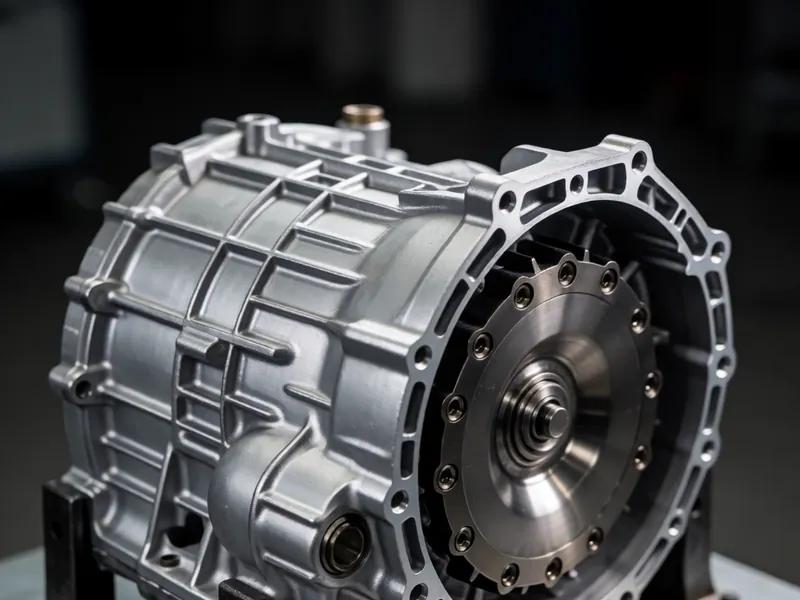
Repair & Diagnostics
Transmission
Drain-and-fill or full exchange decided by your transmission's actual history, CVT-correct fluid, and honest triage when a rebuild is not worth the money.
Read moreA written estimate with photographs, before any work
Book your car in
Every car that comes in goes on a lift and gets a documented inspection before anything is priced, and that inspection is free. You get photographs of what we found and a line-by-line estimate on your phone, and nothing happens until you reply.