Something wrong right now? If a warning light is red, if the temperature gauge is climbing, if the steering or the brakes feel different from how they felt yesterday, or if you can smell fuel — stop driving and call us. A tow costs less than an engine. We will talk you through whether it is safe to bring it in under its own power before you try. Call 000-000-0000
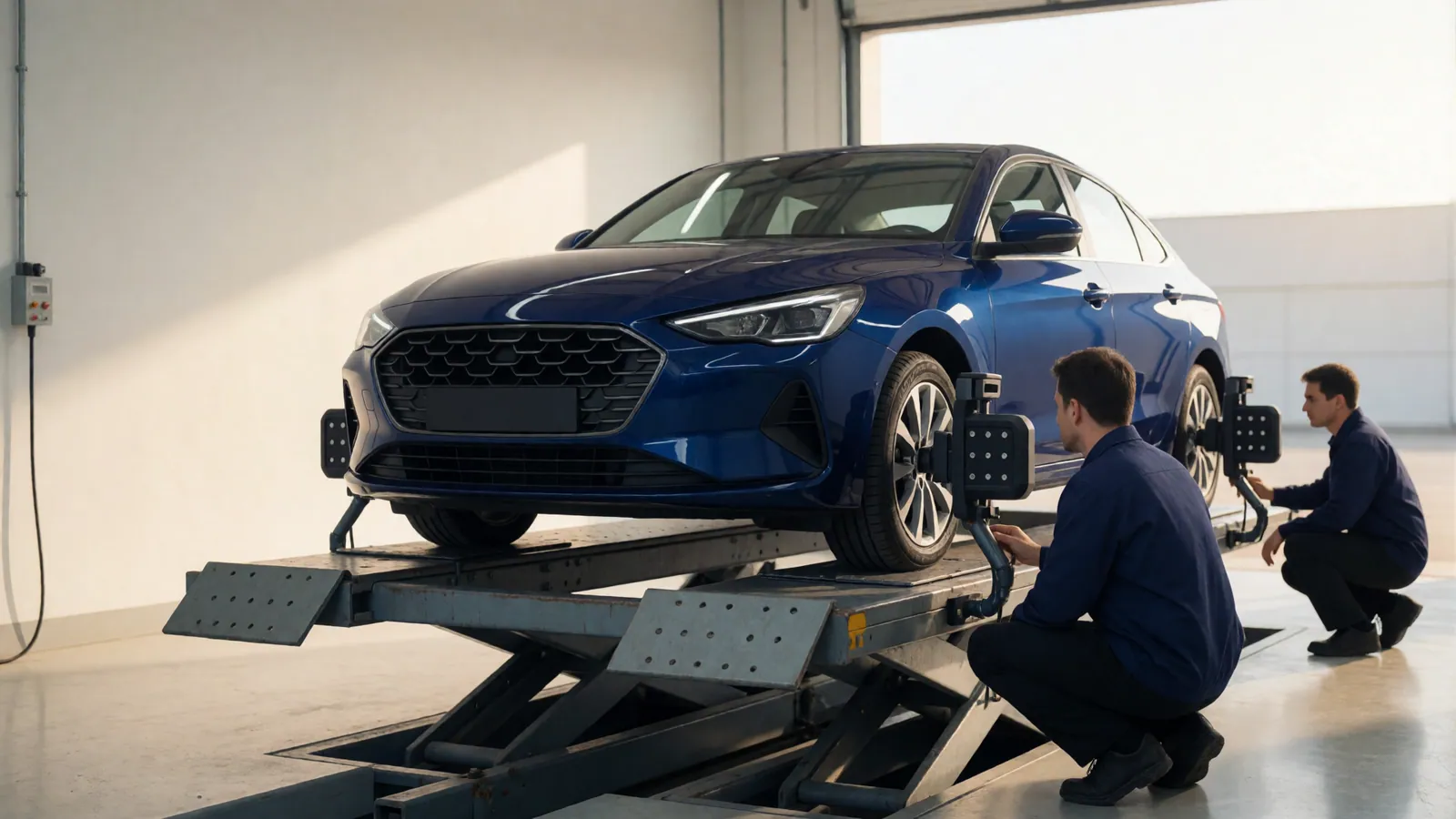
Ask for wheel alignment in Woodside, NY and you should get all four wheels measured, not just the front two. Four-wheel alignment checks every wheel against the other three and against the manufacturer's geometry specification, then adjusts camber, caster and toe until the car tracks straight with even, predictable tire wear ahead of it. Front-only alignment is a legacy of solid rear axles that could not be adjusted — nearly every car built in the last three decades has an adjustable rear end, and skipping it moves the error to a wheel nobody measured.
Three angles do all the work. Camber is how far the top of the tire leans in or out from vertical, and too much of either eats the inside or outside shoulder of the tread. Caster is the tilt of the steering axis, and correct caster is what makes a car want to drive straight and the wheel want to return to center after a turn. Toe is whether the fronts of the two tires point very slightly together or apart, and even a fraction of a degree drags a tire sideways with every rotation and grinds it down early.
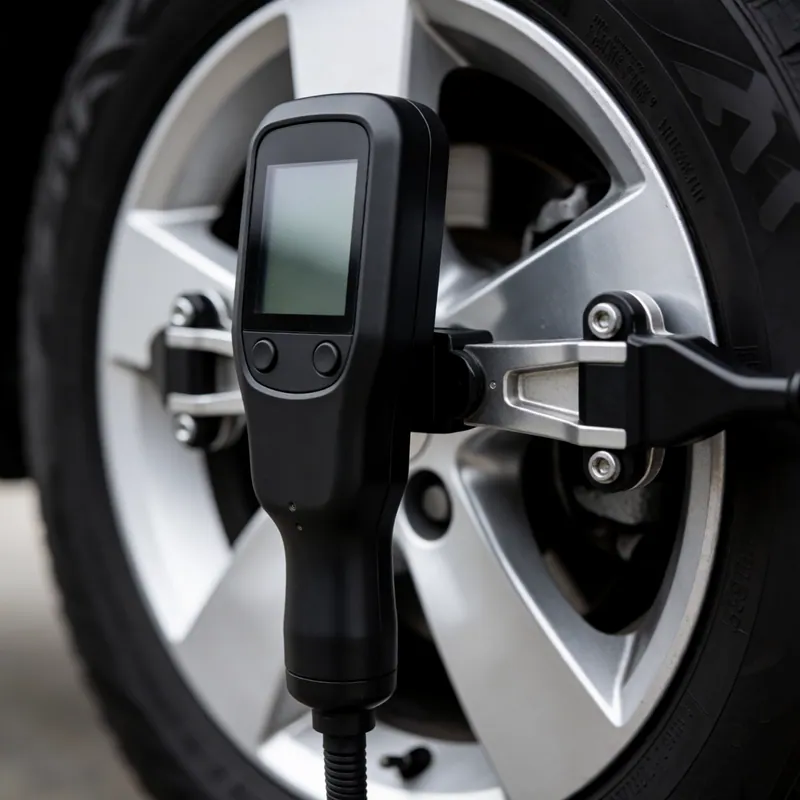
Every alignment here starts and ends with a printout: the measured camber, caster and toe on all four corners before we touch anything, and the same figures again afterward, whether or not adjustment was needed. Rajib, who runs the alignment rack, treats a four-wheel alignment after any strut, control arm or tie rod replacement as part of the job rather than an optional extra. A new part goes in at the factory angle and holds it, and the worn geometry it replaced was the reason the old tires wore the way they did in the first place.
Why four-wheel alignment replaced front-only decades ago
Front-only alignment survives mostly as a cheaper line item, not as good practice.
Solid rear axles used to make it pointless
Older rear-wheel-drive cars with a solid, non-adjustable rear axle genuinely could not have their rear geometry changed, so aligning the front was the entire job. Almost no car built in the last three decades has that kind of rear end.
An unmeasured rear axle can hide the real fault
If the rear axle is out of specification and nobody measures it, aligning the front only makes the car point straight relative to a crooked rear end. The car may track straight down the road while wearing a rear tire on an angle nobody ever saw.
Thrust angle
The rack calculates a thrust line from the rear wheels and squares the front alignment to it rather than to the body of the car. Get this wrong and the steering wheel sits crooked even when the car drives arrow-straight — a classic sign of a front-only alignment done on a car that needed all four measured.
What actually gets adjusted at each corner
Camber and caster are usually adjustable at the front, and on most modern cars, toe and often camber are adjustable at the rear too. Which of the possible adjustments a given car actually has is decided by its suspension design, not by what a shop feels like measuring.
The printout is the proof
A four-wheel alignment produces a document with numbers for all four corners, before and after, that you keep. A front-only alignment produces two numbers and leaves the other half of the car unmeasured and unaccounted for.
The three numbers, and what each one does to a tire
Every alignment problem worth solving comes down to one of these three angles being wrong at one or more corners.
Camber
The inward or outward lean of the tire viewed from the front of the car. Too much negative camber wears the inside shoulder; too much positive wears the outside. A sudden camber change on one side alone, rather than a gradual one on both, usually means a bent part rather than normal settling.
Caster
The backward or forward tilt of the steering axis, invisible from outside the car but felt in every mile of driving. Correct caster is what makes the steering wheel want to return to center after a turn and keeps the car tracking straight without constant correction; too little feels vague and wandering.
Toe
Whether the fronts of the tires point very slightly toward or away from each other when viewed from above. Toe error drags a tire sideways with every single rotation of the wheel, and even a small error compounds over thousands of miles into a feathered, saw-tooth wear pattern across the tread.
Reading the wear instead of waiting for the printout
Feathering across the tread, wear concentrated on one shoulder, or a tire wearing faster on one side of the car than the other are the tread telling you the alignment was wrong long before anyone measured it. We check the wear pattern on every tire we touch, not only on cars booked in specifically for an alignment.
Why adjustment ranges run out on an older or damaged car
Every suspension has a limited range of camber and toe adjustment built into it, and a bent component, worn bushing or previous collision damage can push the actual geometry outside that range. When adjustment alone cannot reach specification, the part causing it has to be identified and replaced first.
When an alignment is worth booking, and when it is not
Not every noise or pull needs a full alignment, but several specific situations genuinely do.
After any strut, control arm or tie rod replacement
Not optional. New suspension parts go in at a set length and angle, and the alignment they hold on day one is the alignment the car keeps until something changes it again. Skipping this step wears in a new set of parts to the same fault the old ones had.
After a hard pothole or curb strike
A hit sharp enough to jolt the wheel through the steering or pull the car noticeably to one side is worth checking even with no visible damage, because bent geometry does not always show from underneath. We check it as part of the free inspection on any car that comes in after one.
Ahead of a new set of tires
An alignment before new rubber goes on protects the investment rather than the old tires — there is no point aligning a car to save tread that is already being replaced. See /tire-change.html for how the mount and balance runs alongside it.
Uneven or rapid tire wear
Feathering, one-sided wear, or a tire visibly wearing faster than the other three is the car telling you something is wrong right now, not eventually. We measure the wear pattern and the alignment together rather than guessing which came first.
A steering wheel that sits off-center
If the wheel is not level when the car is driving perfectly straight, the alignment is squared to the wrong reference, and it usually means a rear thrust angle nobody measured. A four-wheel alignment corrects the reference, not just the symptom.
Wheel Alignment in western Queens
Four wheels measured against each other and against the manufacturer's own geometry, with a printed before-and-after figure whether or not adjustment was needed.
It starts the same way whatever you are here for: the car goes on a lift, gets a free documented inspection, and you get photographs and a line-by-line price on your phone before anybody picks up a tool. Approve the lines you want. Silence is not approval and never has been.
This page is general information, not a diagnosis of your car. Nothing here can tell you whether a specific vehicle is safe to drive, because that needs somebody to look at it. Brakes, tires, steering and suspension are the systems that decide whether a car stops and goes where it is pointed, and a fault in any of them is not something to monitor for a few weeks and see. If the brake pedal has changed, if the steering pulls or feels loose, if a tire is losing pressure repeatedly, or if a warning lamp for any of these is lit, stop driving the car and call us on 000-000-0000 before you drive it further. High-voltage hybrid and electric systems carry a genuine risk of injury and are never work for an untrained person at the roadside.
Questions
Wheel Alignment — the questions we are asked most
How much does a wheel alignment cost in Woodside, NY?
$149 for a full four-wheel alignment, which includes measuring and, where necessary, adjusting camber, caster and toe on all four corners, plus a printed before-and-after report either way. It is the same $149 whether the car needed adjustment or was already within specification — you are paying for the measurement and the proof, not just for parts being turned.
Do I need all four wheels aligned, or just the front two?
All four. Nearly every car built in the last three decades has an adjustable rear suspension, and aligning only the front squares the steering to whatever angle the rear happens to be sitting at, correct or not. Front-only alignment is a holdover from solid rear axles that genuinely could not be adjusted, which describes almost nothing on the road today.
What do camber, caster and toe actually mean?
Camber is how far the top of the tire leans in or out; too much wears one shoulder of the tread. Caster is the tilt of the steering axis, and correct caster is what makes the wheel want to return to center after a turn. Toe is whether the fronts of the tires point slightly together or apart, and even a small error drags the tire sideways with every rotation and wears it prematurely.
Do I need an alignment after hitting a pothole?
If the hit was hard enough to jolt the steering wheel or pull the car to one side afterward, yes, even with no visible damage — bent suspension geometry does not always show from underneath. We check for it as part of the free inspection on any car that comes in describing a pothole strike, and we will tell you honestly if nothing needs adjusting.
Is an alignment really necessary after new struts?
Yes, and we do not consider it optional. A new strut, control arm or tie rod goes in at a specific length and angle, and whatever alignment it holds on day one is the alignment it keeps until something changes it. Skip the alignment and the new part simply wears in to the same fault the old worn one had, defeating much of the point of replacing it.
Can a bad alignment cause uneven tire wear?
It is one of the most common causes. Feathering across the tread, wear concentrated on one shoulder, or one tire wearing faster than the other three all point at camber or toe being out of specification at one or more corners. We measure the wear pattern and the alignment together, because guessing which came first wastes both your money and a tire.
What is your warranty on a wheel alignment?
24 months or 24,000 miles on the workmanship, the same as everything else we sell. If the alignment we performed drifts out of specification inside that window with no new impact, no new suspension wear and no new component involved, we recheck and correct it at no charge. What we cannot warranty against is a fresh pothole, a curb strike, or a worn bushing that fails after we have already sent you home with a clean printout — that is a new alignment, not a warranty claim, and we will tell you honestly which one it is.
How long does a four-wheel alignment take?
About an hour on the rack for most cars, longer if the geometry is far enough out of range that a component needs attention before the adjustment can be completed. It is routinely same-day work, and you get the printed before-and-after report to keep regardless of how much or how little needed changing.
Related
Usually booked alongside this
Tires & Wheels
Tire Change
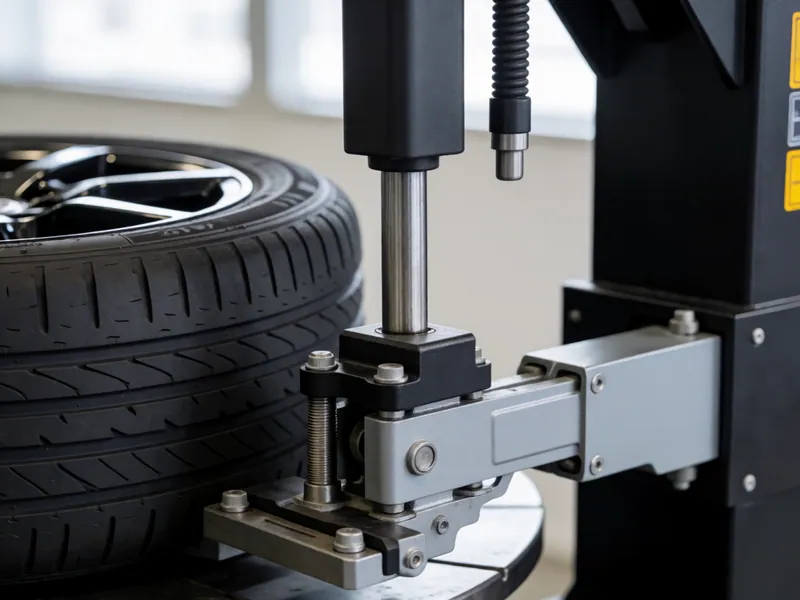
Dismount, mount, road-force balance, a new valve stem and a torque to specification, never an impact gun run to a stop, for $35 a wheel.
Read more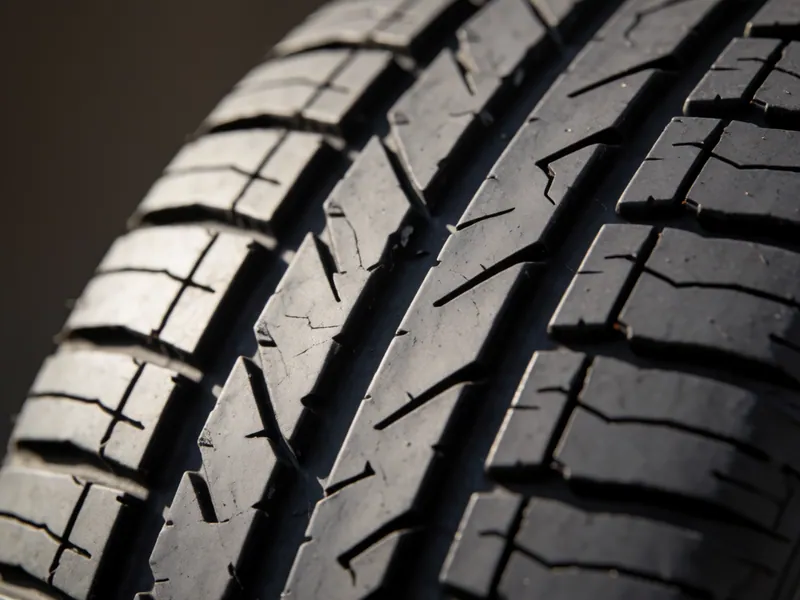
Tires & Wheels
Tire Repair
A patch-plug repair from the inside, done only where the damage sits inside the safe repair area, not a plug pushed in from outside.
Read more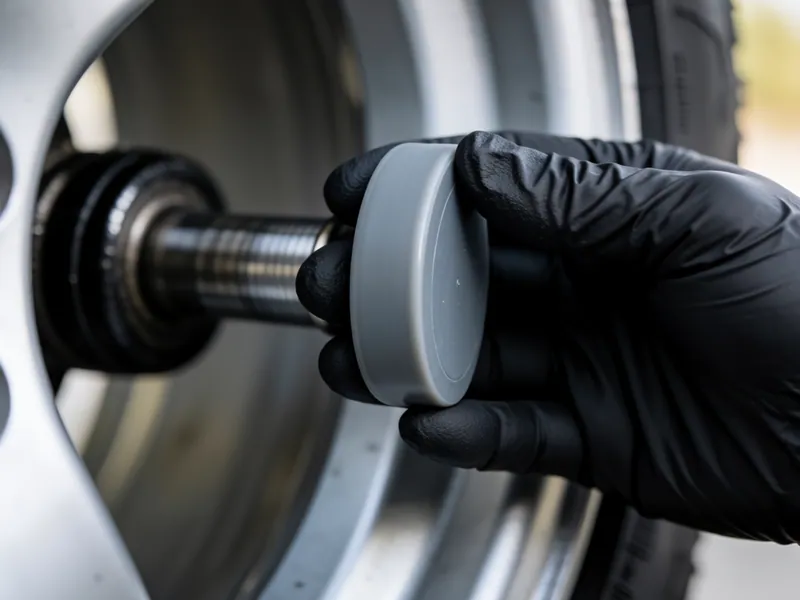
Tires & Wheels
Wheel Balancing
Road-force balancing finds the stiff spot inside a tire that a plain spin balance cannot see — why some shakes take three shops to solve.
Read moreA written estimate with photographs, before any work
Book your car in
Every car that comes in goes on a lift and gets a documented inspection before anything is priced, and that inspection is free. You get photographs of what we found and a line-by-line estimate on your phone, and nothing happens until you reply.