Something wrong right now? If a warning light is red, if the temperature gauge is climbing, if the steering or the brakes feel different from how they felt yesterday, or if you can smell fuel — stop driving and call us. A tow costs less than an engine. We will talk you through whether it is safe to bring it in under its own power before you try. Call 000-000-0000
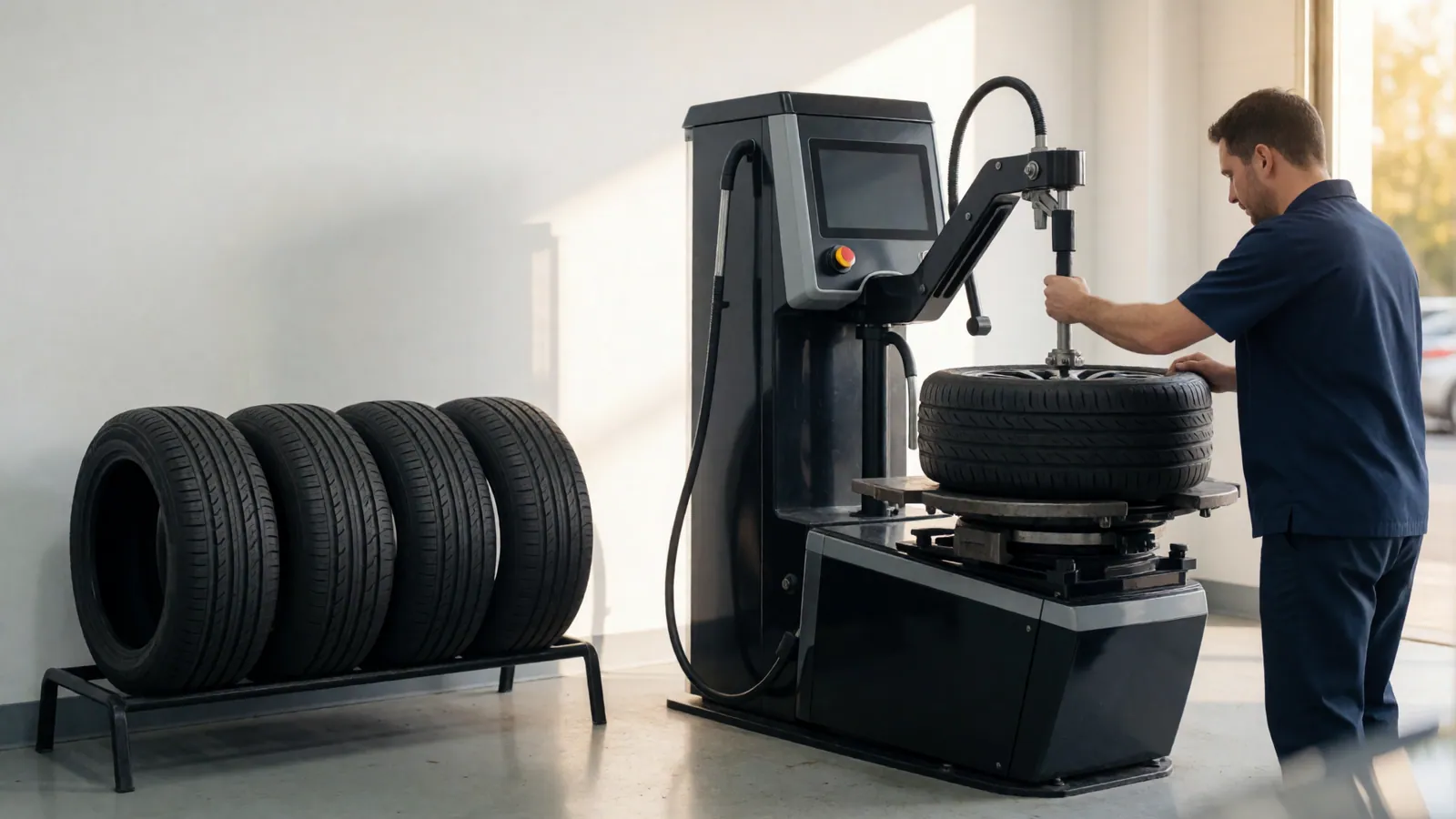
A tire change in Woodside, NY means four things happening to your wheel, in order: the old tire broken down and lifted off without a mark on the rim, the new one mounted and road-force balanced rather than simply spun, a fresh valve stem in place of the one that has been flexing for years, and every lug nut torqued to the manufacturer's number rather than run up on an impact gun until it stops turning. That is the whole job for $35 a wheel.
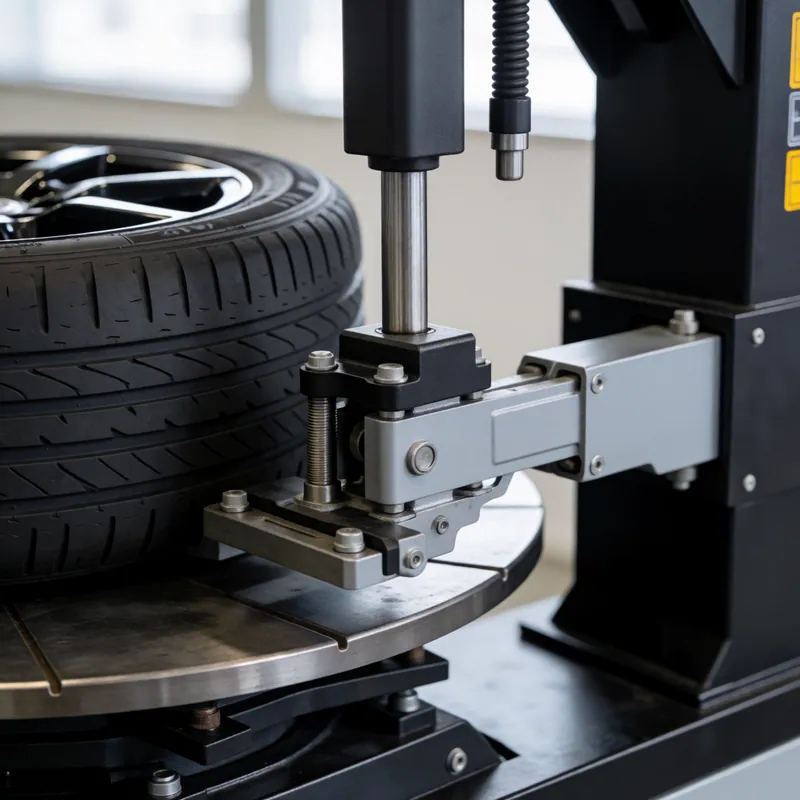
The machine matters as much as the technician. A touchless changer breaks the bead and levers the tire off with rollers and a plastic head instead of a steel bar against the rim — the difference between a tire change and one that leaves a fresh scratch across an alloy wheel. It matters as much what year is stamped into the tire going back on: every tire carries a four-digit date code, and one sold as new after five years on a shelf is not the tire you think you are buying.
All-wheel drive changes the arithmetic of a single flat. Every current system compares the rotational speed of all four wheels, and a new tire next to three worn ones has a different rolling diameter than the wheels around it, which the drivetrain reads as slip and tries to correct — on some systems hard enough to damage the driveline. We will tell you when a matched set of four is the right answer, fit a TPMS sensor where the old one has given up, and rotate the set free for the life of the tires.
What $35 a wheel actually includes
Four steps, every time, in this order, whether the car is in for one tire or a full set.
Dismount without damage
The old tire comes off on a touchless machine that levers it clear of the rim with a plastic head rather than a steel bar. A rim gouged during dismount is invisible under the new tire on day one and turns into a slow leak or a corrosion spot within a year.
Mount and seat
The new tire goes on dry-lubricated at the bead, inflated to seat both edges evenly against the rim, and checked for a uniform seating line all the way round before it ever reaches the balancer. A tire seated unevenly reads as a vibration that looks exactly like a balance problem and is not one.
Road-force balance, not a plain spin
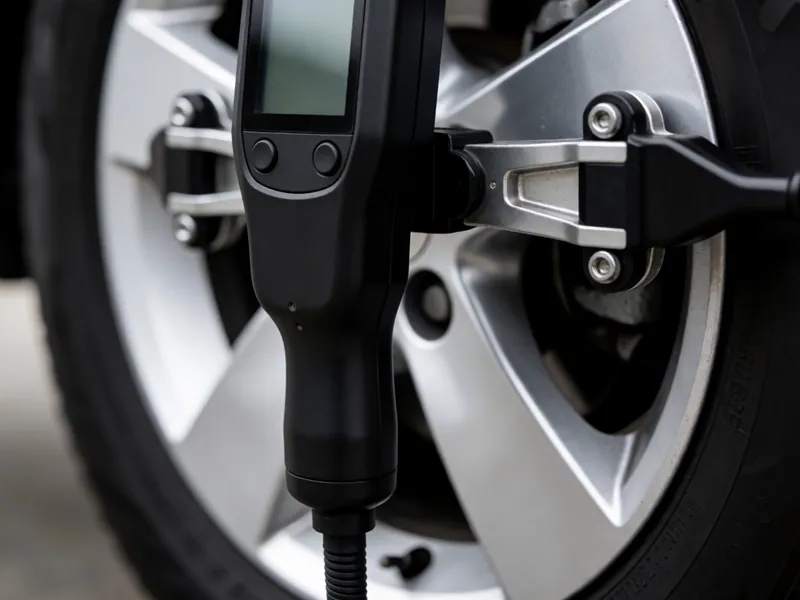
Every wheel goes on a balancer that presses a loaded roller against the tread and measures the wheel under load, not just spinning it freely. That is how a stiff spot inside the tire itself gets found and corrected before it becomes a shake you feel through the seat at highway speed.
A new valve stem, every time
The stem is a ten-cent rubber part that has been flexing under pressure for years, and reusing an old one to save a part costs more than the part the first time it lets go. Every mount includes a new stem and, on the right vehicle, a new TPMS sensor at $95 fitted and programmed.
Torqued to a number, not to a stop
Lug nuts go on with a calibrated torque wrench to the manufacturer's exact figure, checked and available to recheck after the first fifty miles for anybody who wants to bring the car back for it. An impact gun run until it stops can overtighten a lug nut enough to warp a rotor or snap a stud.
What we check before a wheel goes anywhere near the machine
The tire tells you things if you know where to look, and we look before we quote.
The DOT date code
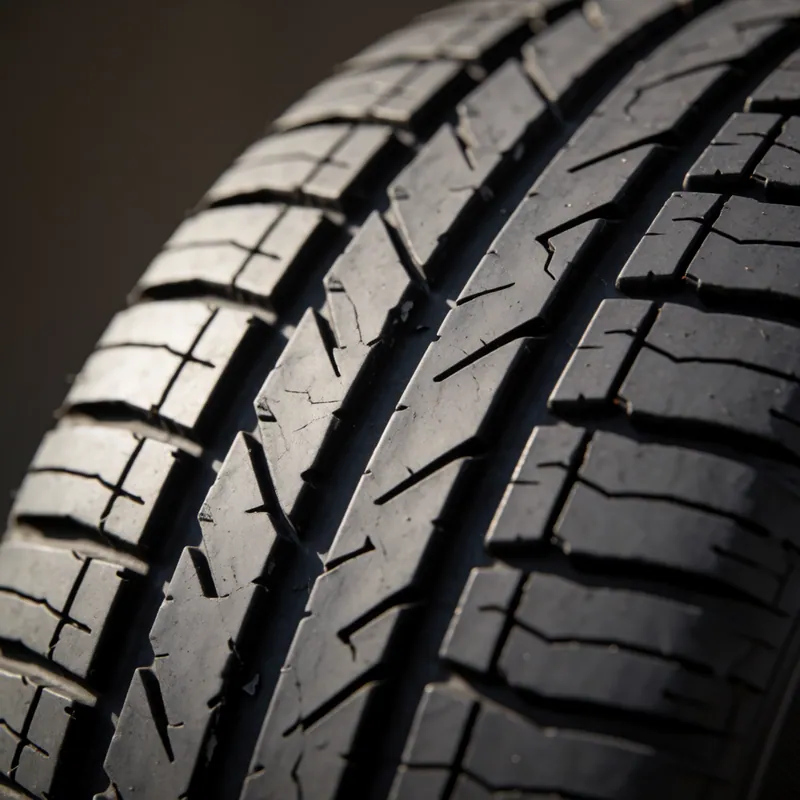
The last four digits of the DOT code stamped on the sidewall are the week and year of manufacture — '2324' means the 23rd week of 2024. A tire can sit in a warehouse for years before it is sold as new, and rubber ages by the calendar whether or not it has ever touched a road.
Why 'new' does not always mean recent
Rubber compound stiffens and the plasticizers that keep it flexible migrate out over time, regardless of mileage. A tire built five years ago and never mounted has already lost meaningful flexibility compared with one built last month, and we will show you the code on anything we fit.
Touchless machines and alloy rims
A steel bar braced against a rim to break the bead has scratched more alloy wheels than curbs have. Our machine's changing head and clamps are rubber-faced and never touch the polished face of the rim, which matters most on the wide, low-profile alloy wheels increasingly common as standard equipment rather than an upgrade.
All-wheel drive and matched sets
A new tire mounted next to three worn ones has a measurably different rolling diameter, and an all-wheel-drive system reads that difference as wheel slip. On some drivetrains the system compensates by working a clutch pack or a differential harder than it should, which is a more expensive problem than a fourth tire.
TPMS sensors
Most cars built since 2008 carry a tire pressure monitoring sensor inside each wheel that reports pressure to the dashboard, and the sensor's own battery is rated for a number of years, not forever. A dead or corroded sensor gets diagnosed and replaced at $95, fitted and programmed to your specific vehicle the same visit.
Getting the most out of a set once it is on the car
The tire change is the start of the relationship, not the end of it.
Free rotation for the life of the set
Any set of tires bought here gets rotated free for as long as you own them, at $45 value each visit. Rotation evens out wear that would otherwise force an early, unmatched replacement on just one axle rather than a full set at once.
When rotation alone will not save an odd tire
A tire worn unevenly from a stuck caliper or a bad alignment will not wear evenly afterward just because it changed position — the cause has to be fixed first. We check for that before every rotation rather than simply moving the same problem around the car.
Pressure, set to placard, not to the sidewall
The number moulded into the tire's own sidewall is the maximum pressure it can hold, not the number your car actually wants. Every mount and every rotation gets set to the figure on the door-jamb placard, which is calculated for your vehicle's real weight and handling.
Seasonal changeover, done to the same standard
Swapping between a summer and a winter set gets the same mount, balance and torque as a new tire, for $120 covering all four rather than $35 a corner — see /seasonal-tire-storage.html for what happens to the set not on the car.
Old tires, if you want them
Ask and we will set the old set aside rather than send it straight to the recycler, in case you want to keep a worn spare, sell them locally, or simply see what we found. It costs us nothing and it is a completely reasonable thing to ask for.
Tire Change in western Queens
Dismount, mount, road-force balance, a new valve stem and a torque to specification, never an impact gun run to a stop, for $35 a wheel.
It starts the same way whatever you are here for: the car goes on a lift, gets a free documented inspection, and you get photographs and a line-by-line price on your phone before anybody picks up a tool. Approve the lines you want. Silence is not approval and never has been.
This page is general information, not a diagnosis of your car. Nothing here can tell you whether a specific vehicle is safe to drive, because that needs somebody to look at it. Brakes, tires, steering and suspension are the systems that decide whether a car stops and goes where it is pointed, and a fault in any of them is not something to monitor for a few weeks and see. If the brake pedal has changed, if the steering pulls or feels loose, if a tire is losing pressure repeatedly, or if a warning lamp for any of these is lit, stop driving the car and call us on 000-000-0000 before you drive it further. High-voltage hybrid and electric systems carry a genuine risk of injury and are never work for an untrained person at the roadside.
Questions
Tire Change — the questions we are asked most
How much does a tire change cost in Woodside, NY?
$35 a wheel to dismount the old tire, mount and road-force balance the new one, fit a fresh valve stem, and torque the lug nuts to the manufacturer's number. A seasonal changeover between a summer and a winter set is $120 for all four rather than $35 a corner. Puncture repair is $45, and rotation is $45 as well, though it is free for the life of any set of tires bought here — call with your tire size and we will confirm the number before you arrive.
How do I know how old a tire actually is?
Every tire carries a DOT code stamped into the sidewall, and the last four digits are the week and year it was built — '2324' is the 23rd week of 2024. Rubber compound stiffens and loses grip with age regardless of mileage, so a tire that has sat in a warehouse for years before it is sold is not the same purchase as one built recently. We will show you the code on anything we fit, and most manufacturers suggest replacement past about six years old regardless of tread depth.
Do I really need to replace all four tires on an all-wheel-drive car?
Usually, yes. Every current all-wheel-drive system compares the rotational speed of all four wheels, and a new tire has a measurably larger rolling diameter than three worn ones, which the drivetrain reads as slip. On some systems that mismatch works a clutch pack or a differential harder than it was designed for, turning a tire bill into a drivetrain bill. We will measure your tread depth and tell you honestly whether two, four, or a full matched set is the right call for your specific car.
What is a TPMS sensor and why does it cost extra?
Most cars built since 2008 carry a sensor inside each wheel that reports tire pressure to the dashboard, and the sensor's own battery is rated for a number of years rather than forever. A tire change does not automatically need a new one, but a sensor that has failed or corroded gets replaced, fitted and programmed to your specific vehicle for $95 — we will tell you before we fit it, not after.
Is tire rotation really free?
For the life of any set of tires bought here, yes — we would rather see the car every few thousand miles for a free rotation than sell you an early, unmatched replacement because one axle wore out first. Rotation on tires bought elsewhere is $45. Either way, a tire worn unevenly from a stuck caliper or a bad alignment will not correct itself just by changing position, so we check for the cause before every rotation rather than simply moving the same problem around the car.
Can you change a tire on an alloy wheel without scratching it?
That is the reason we run a touchless changer rather than a conventional machine with a steel bar. The changing head and clamps are rubber-faced and never contact the polished face of the rim, which matters most on the wide, low-profile alloy wheels that come as standard equipment on most current cars. It is the same machine we use on every wheel, alloy or steel, because there is no reason to run two different standards.
How long does a tire change take?
A single wheel is typically twenty to thirty minutes once the car is on the lift, and a full set of four is usually under two hours including the road-force balance on each one. Most tire changes are same-day work if the car is with us by mid-morning; call ahead with your tire size so we can confirm we have the right tire in stock before you drive over.
What is your warranty on a tire change?
24 months or 24,000 miles on the workmanship, whichever comes first — the mount, the balance, the valve stem and the torque, the same as everything else we sell. If a wheel we mounted develops a vibration, a leak at the bead, or a lug that backs off inside that window, we inspect it at no charge and put it right at no charge. The warranty covers our work; it does not extend the tire manufacturer's own warranty on the tire itself, which we will help you claim separately if it applies.
Related
Usually booked alongside this
Tires & Wheels
Wheel Alignment
Four wheels measured against each other and against the manufacturer's own geometry, with a printed before-and-after figure whether or not adjustment was needed.
Read more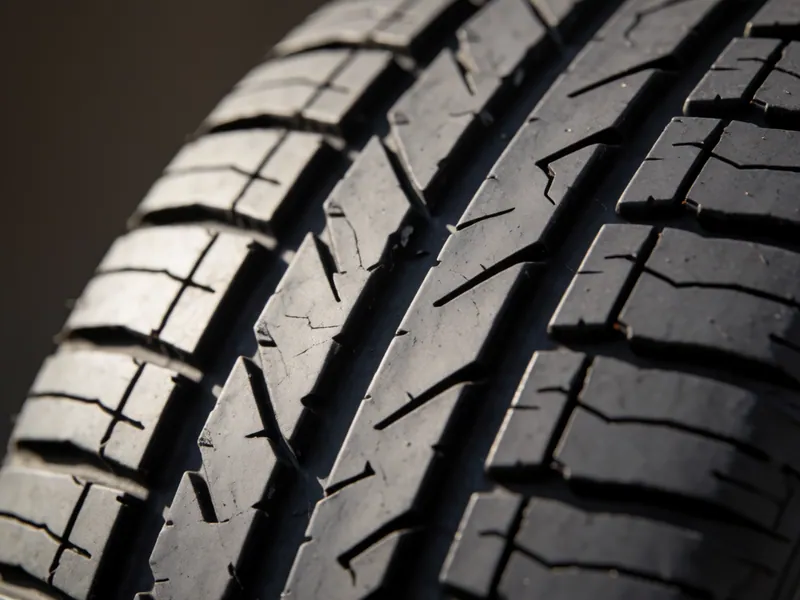
Tires & Wheels
Tire Repair
A patch-plug repair from the inside, done only where the damage sits inside the safe repair area, not a plug pushed in from outside.
Read more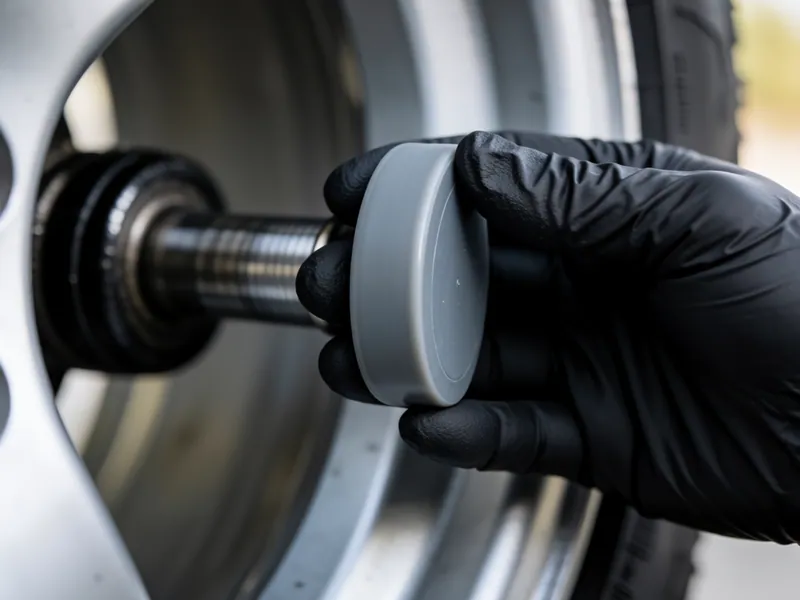
Tires & Wheels
Wheel Balancing
Road-force balancing finds the stiff spot inside a tire that a plain spin balance cannot see — why some shakes take three shops to solve.
Read moreA written estimate with photographs, before any work
Book your car in
Every car that comes in goes on a lift and gets a documented inspection before anything is priced, and that inspection is free. You get photographs of what we found and a line-by-line estimate on your phone, and nothing happens until you reply.