Something wrong right now? If a warning light is red, if the temperature gauge is climbing, if the steering or the brakes feel different from how they felt yesterday, or if you can smell fuel — stop driving and call us. A tow costs less than an engine. We will talk you through whether it is safe to bring it in under its own power before you try. Call 000-000-0000
An auto body shop in Woodside, NY sees two very different kinds of damage, and the difference matters more than most drivers realise. Cosmetic damage — a scuffed bumper cover, a dented fender skin, a cracked mirror housing — changes how the car looks. Structural damage reaches the frame rails, the unibody structure or a suspension mounting point, and changes how the car behaves in the next collision. We tell you honestly which one you have before we quote anything.
We measure rather than eyeball, on a computerised system that checks every structural point against the manufacturer's own published figures, because a car can drive perfectly straight out of the lot and still be measurably out of specification underneath. We are glad to work with your insurer on the paperwork, but the estimate is written for you, not for them, and we will never start work on a supplement — extra damage found once a panel is opened up — that you have not seen and approved first.
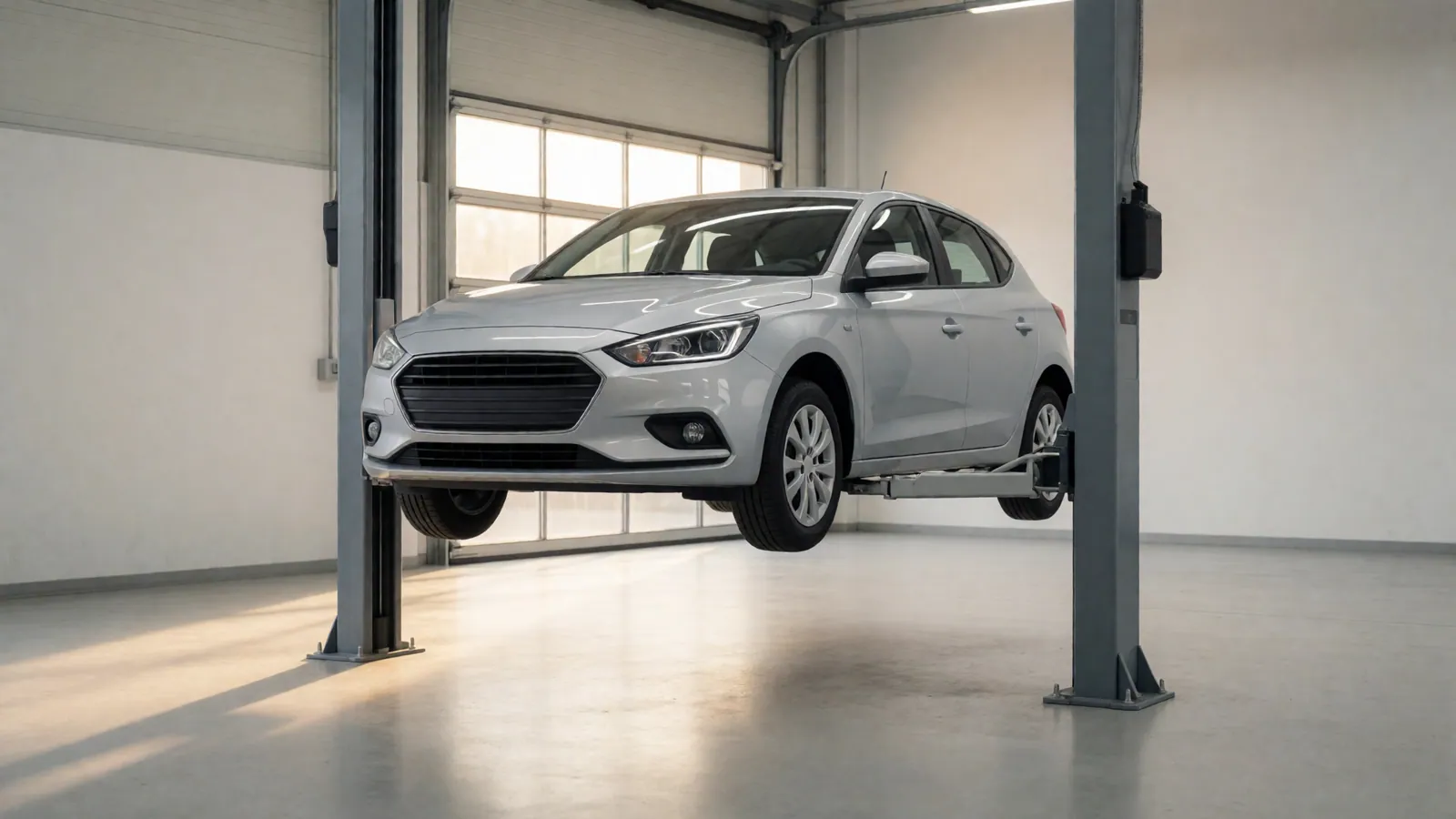
Collision damage does not always end at hand-back; some of it simply never makes it onto the paperwork. A two-hour pre-purchase inspection on a lift recently found weld splatter, painted-over crush damage and a replaced rear floor pan on a car a customer was about to buy — none of it declared, all of it visible once we looked underneath. We apply the same measuring eye to a total-loss decision: what the repair genuinely costs against what the car is actually worth, in writing, before you decide anything.
Structural versus cosmetic — the honest line
The distinction decides how a car is repaired, what it is worth afterward, and sometimes whether it is repaired at all.
What counts as structural
Frame rails, the unibody structure itself, load-bearing crash structure, and suspension or steering mounting points. Damage here affects how the car protects you in the next collision and how it drives every day after this one, which is why it always gets measured rather than judged by eye.
What counts as cosmetic
Bumper covers, fender skins, non-structural quarter panel skins, mirrors, trim and glass. Cosmetic damage can still be expensive to put right, but it does not change how the car behaves on the road, and it is generally the part of an estimate that moves fastest once it is agreed.
Why a car that drives fine can still be structurally damaged
A unibody can be pushed a fraction of an inch out of specification in a low-speed impact and still steer and track acceptably for months, because the tires and the alignment compensate for a surprising amount of misalignment before a driver notices anything. That is exactly why we measure every collision vehicle rather than road-test it and call it good.
Measuring on a computerised system
Every structural point on the car is checked against the manufacturer's own published tolerances rather than against a technician's eye or a tape measure alone, and you get the printed before-and-after figures with the estimate. See /wheel-alignment.html — the same instinct for measured proof over a visual guess runs through every job in this building.
A four-wheel alignment is part of almost every structural repair
Straightening a frame or a suspension mount and then handing the car back without checking the geometry it just changed is how a collision repair produces a steering pull nobody can explain six months later. An alignment check is built into any structural estimate as standard, not offered as an upsell afterward.
Working with your insurer, for you
We answer to the person who owns the car, and the paperwork follows from that rather than the other way round.
We are independent of every insurer
No insurance company owns this shop, steers work to it, or gets a discount for volume, which means our estimate reflects what your specific car actually needs rather than a rate an insurer would prefer we hit. You are free to take any estimate we write to any shop you choose.
Why supplements happen at all
A collision estimate is written from what can be seen before disassembly, and a meaningful share of the real damage on any hit hard enough to bend metal is hidden until a panel comes off. That additional, previously invisible damage is a supplement, and finding one is normal rather than a sign anybody did anything wrong the first time.
The rule we do not break on a supplement
Photographs and a written price for the newly found damage, sent to you before a tool touches it, every single time — the same standard the original estimate was held to. Work does not resume on that section of the car until you have replied, whichever insurer is involved.
What a total loss decision actually means
An insurer declares a car a total loss when the repair cost plus a diminished value figure exceeds a set percentage of the car's actual cash value — a paperwork threshold, not a statement about whether the car could be repaired well. We will give you our own honest repair estimate regardless, because that number is yours to use however you decide.
Parts sourcing, stated plainly
New, used and aftermarket panels all have a place in an honest estimate, and the choice affects both price and resale disclosure. We tell you which category each line item falls into before you approve it, rather than letting the word 'parts' cover three very different decisions.
The pre-purchase angle — what a bad repair leaves behind
A collision that never made the paperwork is still visible on a lift, to somebody who knows what to look for.
Weld splatter and mismatched seams
Factory welds are consistent and machine-placed; a repair weld is done by hand and looks it, with splatter, inconsistent spacing, or a seam sealer bead that does not match the factory pattern on the untouched side of the car. Trained eyes find this in minutes on a lift; almost nobody finds it from the driver's seat.
Paint thickness readings that do not add up
A gauge reading a panel at three or four times the thickness of its untouched neighbours almost always means filler under the paint, hiding a repair that was never disclosed. It takes about a minute per panel and it is one of the most useful two minutes in a pre-purchase inspection.
The $9,000 save
A customer was two hours from buying a low-mileage SUV when our lift inspection found weld splatter, painted-over crush damage and a replaced rear floor pan — none of it on the paperwork he had been shown. He paid $199 for the inspection and walked away from a car that would have cost him a great deal more than that to discover the truth about later.
Why an accident report is not proof of a clean history
Plenty of collision repairs, especially lower-speed ones paid out of pocket rather than through insurance, are never reported anywhere a vehicle history service could find them. A history report is a starting point, not a verdict, and a physical inspection on a lift is the only way to see what a repair record does not mention.
Book it before you buy, not after
A two-hour inspection before money changes hands costs a small fraction of what a previously repaired structure can cost you afterward, whether that is in resale value, insurance complications, or a repair you inherit that was never disclosed. Once you have paid, the leverage to walk away is gone.
Collision Repair in western Queens
Structural damage measured rather than guessed, an insurer we work with but never for, and a written estimate before a supplement is ever approved.
It starts the same way whatever you are here for: the car goes on a lift, gets a free documented inspection, and you get photographs and a line-by-line price on your phone before anybody picks up a tool. Approve the lines you want. Silence is not approval and never has been.
This page is general information, not a diagnosis of your car. Nothing here can tell you whether a specific vehicle is safe to drive, because that needs somebody to look at it. Brakes, tires, steering and suspension are the systems that decide whether a car stops and goes where it is pointed, and a fault in any of them is not something to monitor for a few weeks and see. If the brake pedal has changed, if the steering pulls or feels loose, if a tire is losing pressure repeatedly, or if a warning lamp for any of these is lit, stop driving the car and call us on 000-000-0000 before you drive it further. High-voltage hybrid and electric systems carry a genuine risk of injury and are never work for an untrained person at the roadside.
Questions
Collision Repair — the questions we are asked most
How much does collision repair cost?
There is no single number, because no two collisions damage a car the same way — a scuffed bumper cover and a bent frame rail are both collision damage and they are nowhere near the same job. What we can tell you upfront is the reference pricing: $450 to $890 per panel for paint, $390 for a bumper repair, $150 to $350 per paintless dent. A full estimate for your specific car comes after a free inspection on a lift, in writing, before anything is approved.
How do you tell structural damage from cosmetic damage?
By measuring, not by looking. Every collision vehicle goes on a lift and every structural point is checked against the manufacturer's own published figures, because a car can steer and track acceptably for months with a frame that is measurably out of specification. Cosmetic damage — bumper covers, fender skins, trim, glass — changes how the car looks. Structural damage reaches the frame, the unibody or a suspension mounting point, and changes how the car behaves. We tell you plainly which one you have.
Will you work with my insurance company?
Yes, and we are glad to handle the paperwork directly with your adjuster. What we will not do is write the estimate for the insurer's convenience rather than your car's actual needs — we are independent of every insurance company, take no referral fee from any of them, and you are free to take our written estimate to any shop you choose. If the insurer disputes a line item, we will explain our reasoning to them directly.
What is a supplement, and why do estimates sometimes go up?
A collision estimate is written from what is visible before disassembly, and real damage on any impact hard enough to bend metal is often hidden until a panel comes off. That newly found damage is a supplement. We photograph it, price it, and send it to you before a tool touches that section of the car — work does not continue until you have replied, regardless of which insurer is involved or how minor the addition looks to us.
What does it mean if my car is declared a total loss?
It means an insurer has decided that the repair cost, plus a diminished value figure, exceeds a set percentage of the car's actual cash value — a paperwork threshold rather than a judgment that the car could not be repaired well. We will give you our own honest repair estimate regardless of that decision, in writing, so you have a real number to weigh against whatever the insurer offers you for the vehicle.
Can a pre-purchase inspection catch previous collision damage that was never disclosed?
Yes, and it is one of the most valuable two hours you can spend before buying a used car. On a lift we look for weld splatter, mismatched panel gaps, paint thickness readings that suggest hidden filler, and structural measurements that do not match factory specification — the kind of previously repaired damage that rarely appears on a vehicle history report. One customer walked away from a $9,000 mistake because of exactly this inspection.
How long does collision repair take?
Two to five days for most panel and paint work, longer for anything structural that needs a full disassembly, measurement, repair and re-measurement before paint even starts. Paint cures on its own schedule and there is no honest way to shorten that. You get a real date once the estimate is approved, and if that date is going to move, you hear it from us before you notice it yourself.
What is your warranty on collision and body repair?
24 months or 24,000 miles on both the parts and the labour, whichever comes first, and it stays with the car rather than with you, so it survives a sale. If a repair we carried out fails inside that window — a panel gap that moves, a weld that was not sound, paint that lifts — we inspect it at no charge and put it right at no charge, without a discussion about whose fault it was.
Related
Usually booked alongside this
Body, Paint & Finish
Paint & Retouching
Colour matched with a spectrophotometer against your actual panel, sprayed in a sealed booth, and blended so the seam disappears.
Read more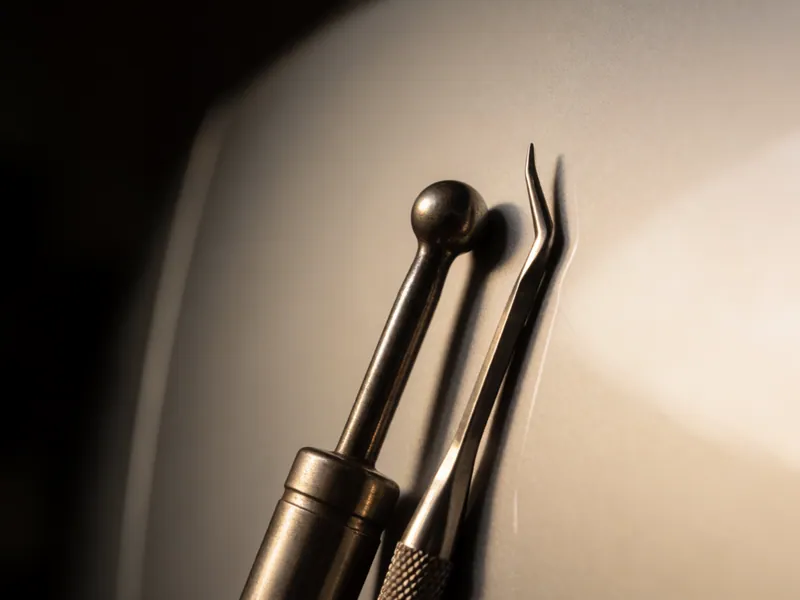
Body, Paint & Finish
Dent Repair
Paintless dent removal that works the metal from behind, so the factory finish that came with the car is the finish that stays on it.
Read more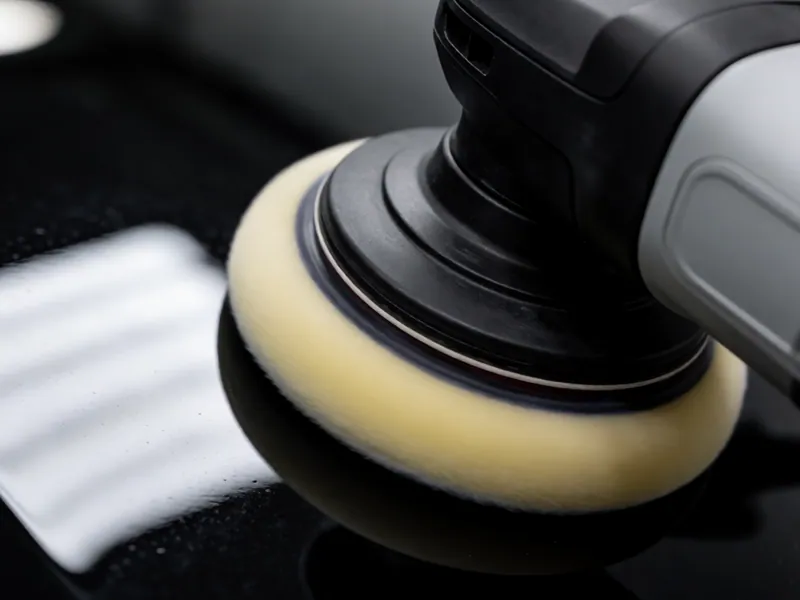
Body, Paint & Finish
Detailing & Protection
Two-stage paint correction that actually removes swirl marks, ceramic coating applied only once that work is done, and a full day of interior work besides.
Read moreA written estimate with photographs, before any work
Book your car in
Every car that comes in goes on a lift and gets a documented inspection before anything is priced, and that inspection is free. You get photographs of what we found and a line-by-line estimate on your phone, and nothing happens until you reply.