Something wrong right now? If a warning light is red, if the temperature gauge is climbing, if the steering or the brakes feel different from how they felt yesterday, or if you can smell fuel — stop driving and call us. A tow costs less than an engine. We will talk you through whether it is safe to bring it in under its own power before you try. Call 000-000-0000
Ask a shop for auto paint or car paint repair in Woodside, NY and most will read the paint code stamped on your door jamb and mix to that. We read your actual panel with a spectrophotometer instead, because a five-year-old car has not been its factory colour for five years — sun, washing and simple time move every colour a measurable distance, and a code-matched panel next to a faded one is worse than not painting it at all.
Paint applied to a hard edge in the middle of a panel almost always shows as a line the moment the sun sits low, even when the colour match is excellent. Our standard practice is to blend the new colour into the clear coat of the panel next door, fading the edge out of existence rather than hiding it, so the join reads as one continuous surface instead of two panels that happen to be close.
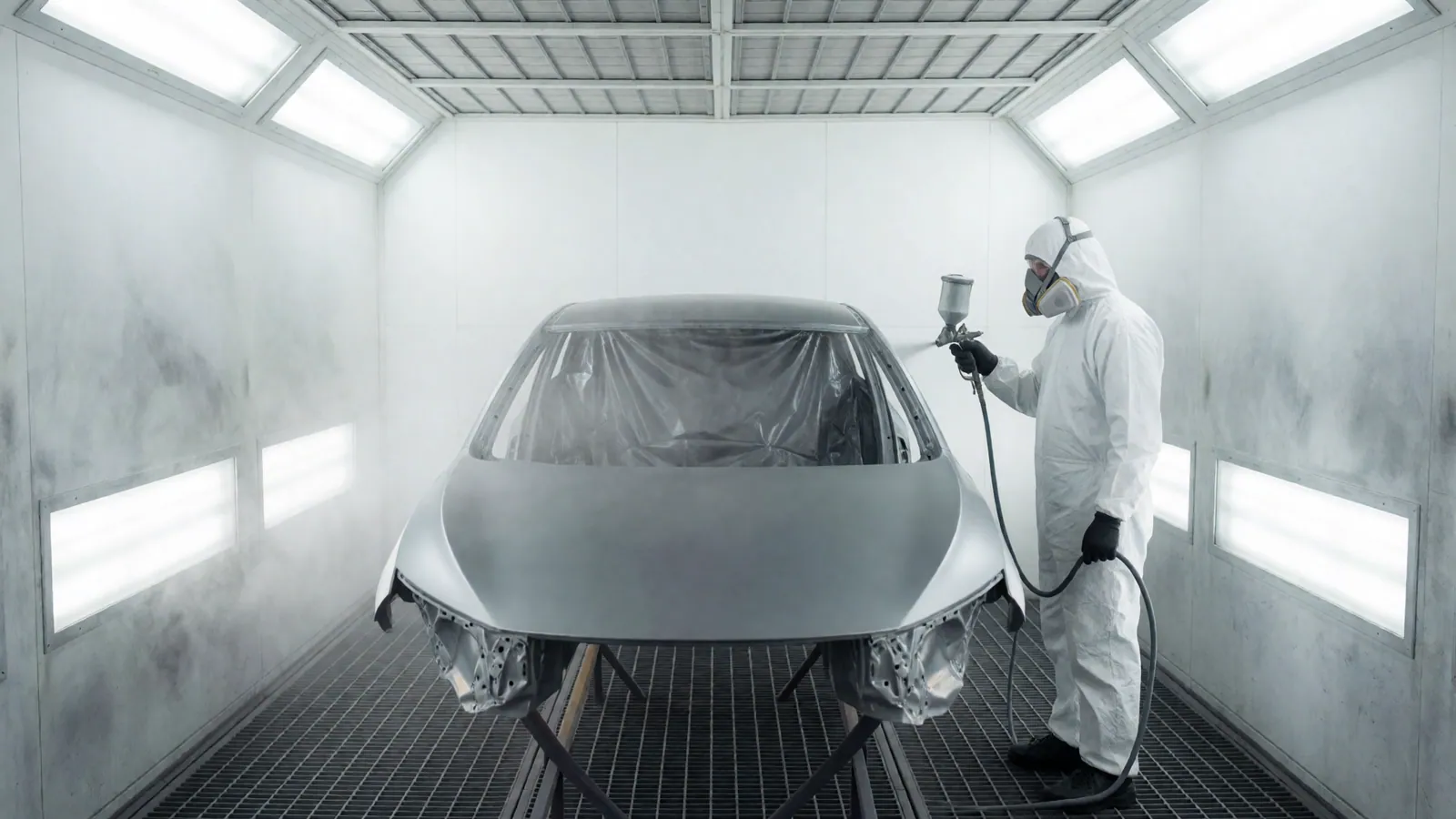
None of this happens quickly, and we will not pretend otherwise. Colour goes on in a sealed downdraft booth where filtered air moves dust away from the wet panel rather than onto it, each coat gets its own flash time, and the clear coat needs real heat and real hours to cure to full hardness. A panel repair is two to five days from drop-off to collection; a stone chip that only needs a touch-in, rather than a full respray, is often the faster and cheaper answer.
How we match a colour that has not been factory-fresh in years
Matching starts with the panel in front of us, not with a code in a database.
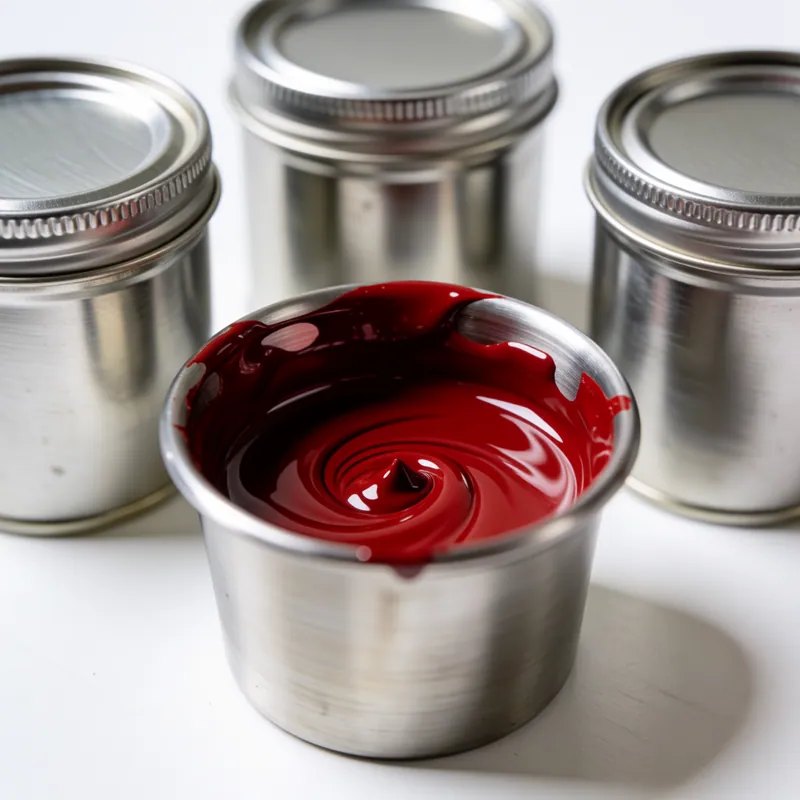
The paint code on the door jamb
Tells us what colour left the factory, not what colour your car is today. Sun, environment and simple time move a colour a measurable distance in five years, and a code-matched panel dropped in next to a faded one looks worse than no repair at all.
The spectrophotometer reading
A handheld instrument reads the actual colour of your actual panel and calculates a mix from that reading, rather than from a database entry keyed to your build year. It is the difference between painting the car that left the factory and painting the car standing in our bay today.
Blending into the next panel
We rarely paint to a hard edge at a seam, because even a near-perfect match can show as a line in low sun. Instead we fade the new colour into the clear coat of the adjacent panel, so the transition is invisible rather than merely close.
A test card before the gun ever touches your car
Aoife sprays a card, lets it cure, and checks it against the vehicle in daylight before committing the panel, because a colour that reads correctly under booth lighting can shift the moment the car is back outside in the sun.
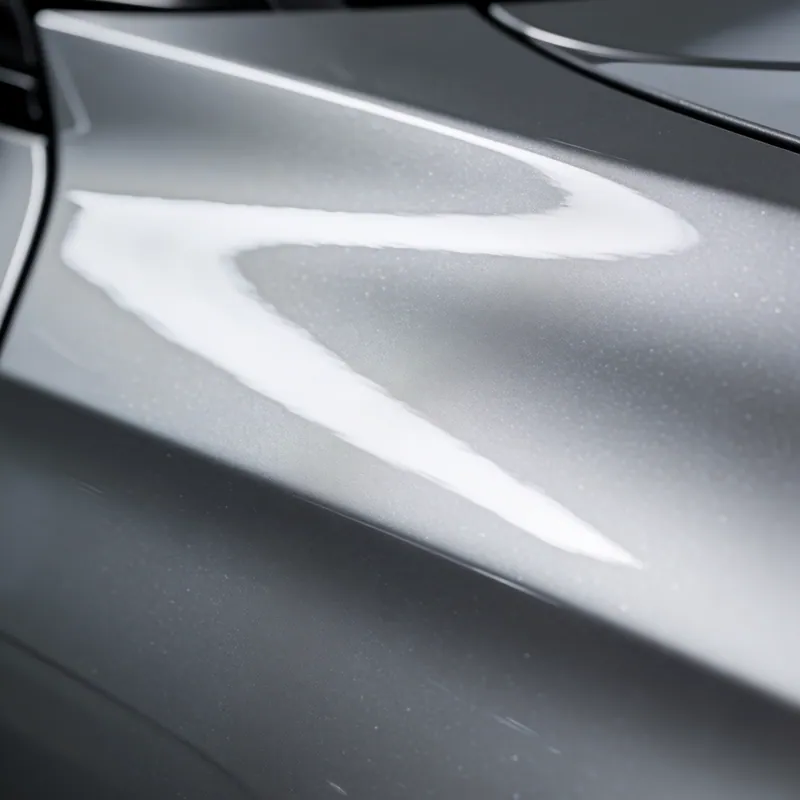
Metallic and pearl finishes
These shift colour with the angle you view them from, which is exactly why matching them by eye alone fails so often. The spectrophotometer reading accounts for flake size and pearl content as well as base hue, which a paint code alone cannot.
Why the booth and the calendar matter more than the gun
The chemistry does the real work here, on its own schedule, inside a sealed room rather than in the open shop.
A sealed downdraft booth
Filtered air moves from ceiling to floor, carrying dust away from the wet panel instead of letting it settle onto it. Dust control is most of what separates a panel that only needs a light polish from one that has to be cut back hard to remove grit trapped in the clear coat.
Heated cure, not a heat gun
The booth raises temperature evenly across the whole panel once the coats are on, curing the clear coat to full hardness in hours rather than the days it would take at room temperature, without ever concentrating heat on one spot the way a handheld lamp does.
Why we will not promise it back tomorrow
Primer, colour and clear coat each need their own flash time before the next goes on, and the clear coat needs genuine cure time before the car can be handled, taped or driven hard again. A rushed cure looks fine in the bay and shows shrinkage or a dull patch six months later.
What actually fills two to five days
Masking and prep, primer, colour coats, clear coats, cure, then a final cut and polish. A single panel sits at the short end of that range; a bumper, more than one panel, or a colour that needs several test cards sits at the long end.
The result you are actually paying for
A panel finished in the booth needs only a light polish to bring up full gloss, because nothing landed on it while it was wet. A panel sprayed in an open shop has to be cut back hard enough to remove trapped dirt, which thins the clear coat below what the manufacturer originally put down.
Touch-in or full panel — how we decide, and what it costs
Not every mark needs the same repair, and the honest answer is usually cheaper than the one you were braced for.
Stone chips and a touch-in
A scatter of chips on a hood or a bumper, none through to bare metal, can often be filled and blended locally rather than sprayed across the whole panel — a fraction of the cost and, done carefully, invisible from more than a couple of feet away.
When a chip needs the full panel instead
Chips that have already rusted through, that reach bare metal, or that sit dense enough to leave a touch-in looking like a rash of dots rather than an invisible repair, get a full respray instead. We will show you the difference under daylight before you decide.
Per-panel pricing, $450 to $890
The range covers everything from a straightforward flat door panel to a curved, character-lined panel that takes longer to blend and longer again to polish out. You get the number for your actual panel, in writing, before we ever pick up a gun.
Bumper scuff repair, $390
The single most common job in this bay: a parking-lot scrape or scuff sanded, filled, primed, coloured and cleared rather than replaced outright. Worth doing before you sell a car or hand back a lease — see /detailing-and-protection.html for what usually happens to the rest of the car at the same time.
What a panel price does not include
A dent underneath the paint is priced and pulled separately, usually before the panel is sprayed rather than after — see /dent-repair.html. A cracked or torn panel that needs replacing rather than repairing belongs to a collision estimate, not a paint one — see /collision-repair.html.
Paint & Retouching in western Queens
Colour matched with a spectrophotometer against your actual panel, sprayed in a sealed booth, and blended so the seam disappears.
It starts the same way whatever you are here for: the car goes on a lift, gets a free documented inspection, and you get photographs and a line-by-line price on your phone before anybody picks up a tool. Approve the lines you want. Silence is not approval and never has been.
Questions
Paint & Retouching — the questions we are asked most
How much does auto paint repair cost in Woodside, NY?
A single panel, camera-matched and sprayed in our sealed booth, runs $450 to $890 depending on the panel and how much blending it needs into what sits next to it. A bumper scuff — the most common job we do — is a flat $390. A stone chip that only needs a touch-in rather than a full respray is usually a fraction of either number. Every price is written down and shown to you before we start, never estimated verbally over the counter.
Will the colour actually match my car, not just the paint code?
We do not mix to the code on your door jamb, because that code describes the colour your car was when it left the factory rather than the colour it is now. A spectrophotometer reads your actual panel, we mix to that reading, spray a test card, and check it in daylight against the car before committing the real panel. Sun, washing and time move every colour a measurable distance over five years, which is exactly why the code alone is not enough.
Why does a paint repair take days instead of hours?
Because the chemistry sets the schedule, not us. Primer, colour and clear coat each need their own flash time, and the clear coat needs genuine heat and hours to cure to full hardness before the panel can be cut, polished or driven hard. A single panel repair is two to five days from drop-off to collection; more than one panel, or a colour needing several test cards, sits toward the long end. We will give you a real date, not a hopeful one.
Can you touch up a stone chip without repainting the whole panel?
Often, yes. A scatter of chips that have not rusted and have not gone through to bare metal can usually be filled and blended locally rather than sprayed across the entire panel, at a fraction of the panel price. Chips that have already rusted, gone to bare metal, or sit dense enough to look like a rash of dots after a touch-in are better served by a full respray, and we will show you the difference in daylight before you decide which to pay for.
Do you paint to the edge of the panel or blend into the next one?
We blend, as standard, rather than paint to a hard line at the seam. Even an excellent colour match can show as a visible edge the moment the sun sits low, so we fade the new colour into the clear coat of the panel next door instead, which makes the join disappear rather than merely narrowing it. It costs a little more material and a little more time in the booth, and it is the difference between a repair you can see and one you cannot.
Will the repaired panel be noticeable in bright sunlight?
That is the exact test we hold our own work to, because bright, low, angled sun is where a poor colour match or a hard paint edge shows up first — a customer will always find it there before we do if we have missed something. Matching by spectrophotometer, checking a test card in daylight rather than only under booth lighting, and blending into the next panel rather than stopping at a seam are all aimed squarely at passing that test, not at looking acceptable under a showroom light.
What is your warranty on paint and retouching work?
24 months or 24,000 miles, whichever comes first, on the workmanship and the materials, the same as everything else we sell. If a repaired panel lifts, cracks, or fades unevenly against the panel next to it inside that window, we inspect it at no charge and put it right at no charge, and we do not argue about whether the cause was the paint, the prep, or the substrate. The warranty stays with the car, so it survives a sale.
Can you match colour on a car that has been repainted badly somewhere else?
Usually, though it takes longer and we will say so upfront. A previous poor repaint often means matching against paint that has already faded or been mixed slightly wrong, so we will sometimes need to blend across more than one panel to land the colour convincingly, or recommend a wider repair than you came in expecting. We will show you exactly why before we quote it, on the car, in daylight, rather than ask you to trust a description over the phone.
Related
Usually booked alongside this
Body, Paint & Finish
Dent Repair
Paintless dent removal that works the metal from behind, so the factory finish that came with the car is the finish that stays on it.
Read more
Body, Paint & Finish
Collision Repair
Structural damage measured rather than guessed, an insurer we work with but never for, and a written estimate before a supplement is ever approved.
Read more
Body, Paint & Finish
Detailing & Protection
Two-stage paint correction that actually removes swirl marks, ceramic coating applied only once that work is done, and a full day of interior work besides.
Read moreA written estimate with photographs, before any work
Book your car in
Every car that comes in goes on a lift and gets a documented inspection before anything is priced, and that inspection is free. You get photographs of what we found and a line-by-line estimate on your phone, and nothing happens until you reply.