Something wrong right now? If a warning light is red, if the temperature gauge is climbing, if the steering or the brakes feel different from how they felt yesterday, or if you can smell fuel — stop driving and call us. A tow costs less than an engine. We will talk you through whether it is safe to bring it in under its own power before you try. Call 000-000-0000
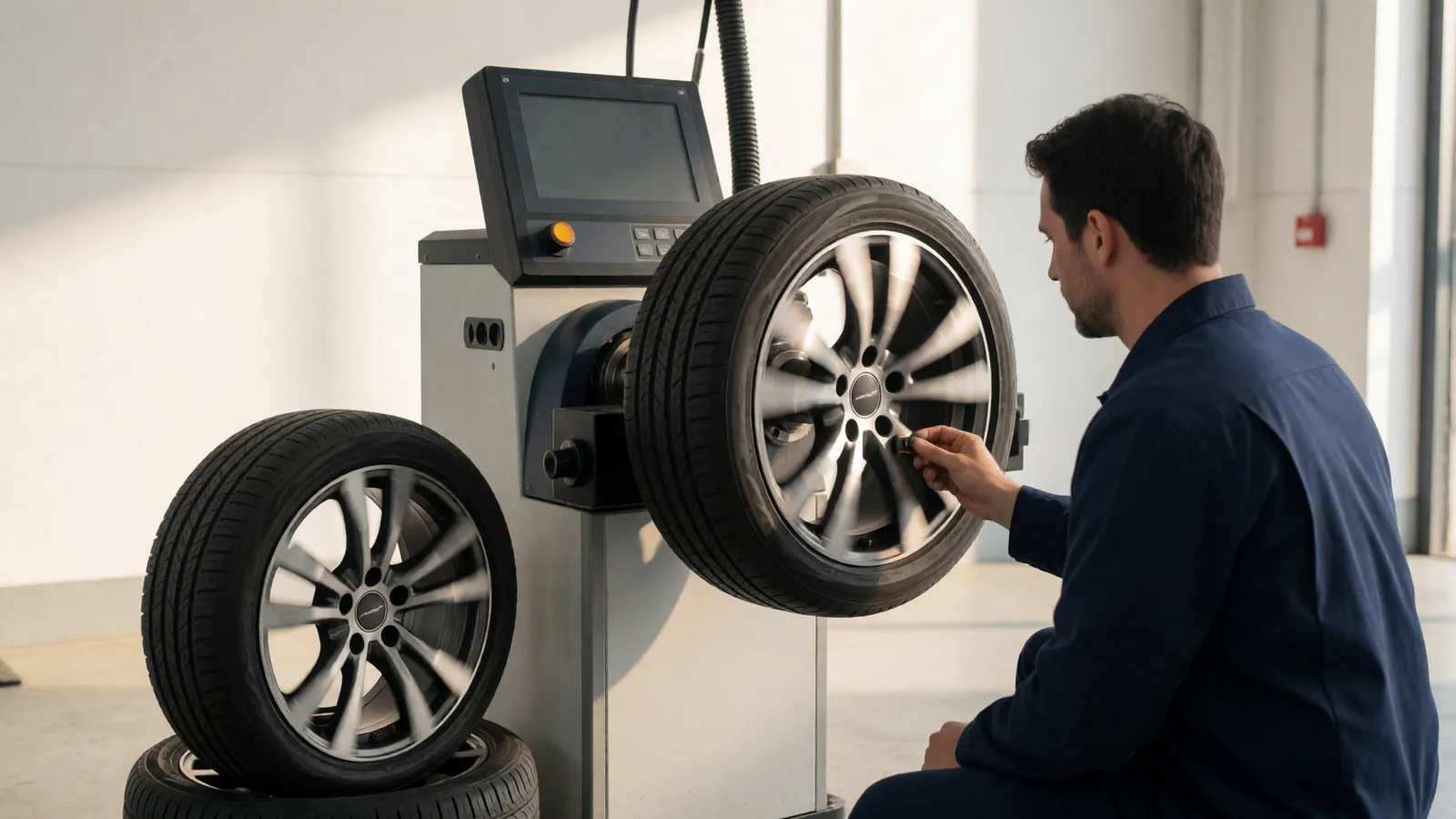
Wheel balancing in Woodside, NY usually means one of two different things, and the difference explains most of the vibration complaints that arrive here after other shops have already tried. A plain spin balancer spins the wheel freely and adds weight until it stops preferring to rest in one position, which corrects for uneven weight distribution but says nothing about whether the tire is round and consistent once it is actually carrying the weight of the car.
A road-force balancer presses a large loaded roller against the tread with something close to the car's actual weight on it, and measures how much the wheel pushes back as it turns, catching a stiff spot baked into a tire's belt that a stationary spin test cannot detect. Rajib, who runs our tire and alignment lane, found this on a five-year-old crossover that had been to two shops for a rebalance and a third for an unneeded alignment: one front tire, perfectly balanced at a standstill, badly out of round under load. One tire, $210, and the shake was gone.
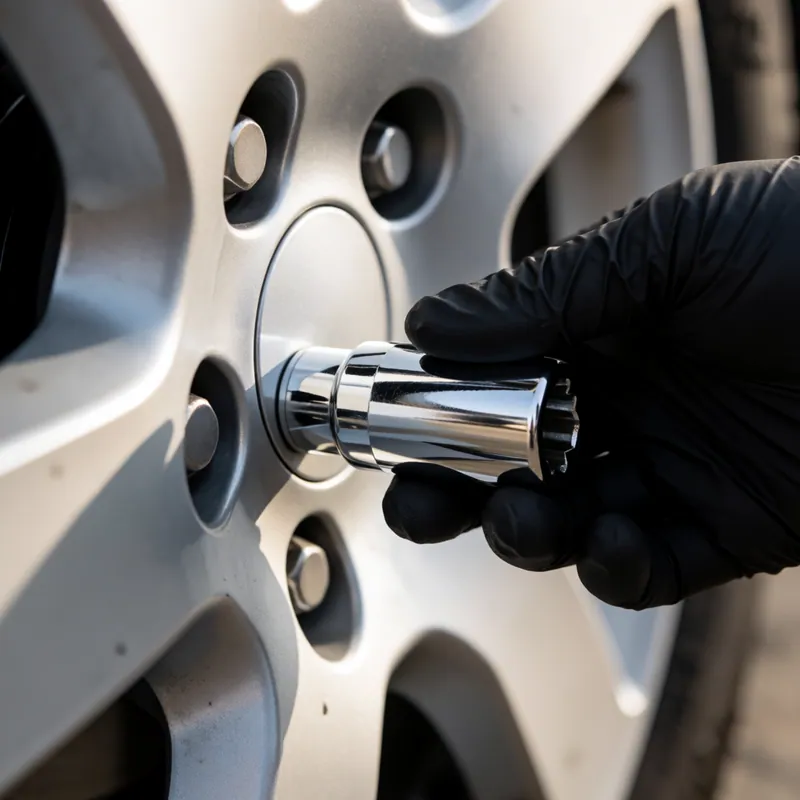
The fix, once found, is ordinary: clip-on steel weights on a painted steel wheel, or adhesive weights stuck to the inside barrel on an alloy wheel where a clip would mark the finish. Match-mounting goes a step further before any weight is added, rotating the tire on the rim so its own high spot sits opposite the wheel's low spot, letting the two errors cancel out rather than stack into one bigger one. Balancing is included in every $35 mount; on its own, for a set already on the car, it is $140 for all four.

Road-force balancing versus a plain spin balance
Both processes put a spinning wheel through a machine. Only one of them tells you what happens once that wheel is actually carrying weight.
What a spin balancer measures
The wheel spins freely with no load pressing on the tread, and the machine finds where it is heavier on one side than the other, then tells the technician where to clip or stick a counterweight. It is fast, it is standard on every mount, and it solves the majority of vibration complaints.
What it cannot see
A tire can be evenly weighted all the way around and still have a stiffer section in its internal belt structure, invisible to a machine that never loads the tread the way the road does. That stiff spot behaves like a slightly flat spot every time it comes around, once there is real weight pressing on it.
What a road-force balancer adds
A large roller, loaded against the tread with a force approximating the car's actual corner weight, spins with the wheel and measures the variation in resistance all the way around. A stiff section shows up as a spike in that measurement even though the wheel would pass a plain spin balance with no correction needed at all.
Why this matters most above highway speed
A stiff spot that is barely noticeable at 30 mph can produce a distinct shake through the steering wheel or the seat at 60 or 70, which is exactly the speed range where a wheel that already 'balanced perfectly' keeps coming back as a customer complaint.
When road-force finds a genuine tire fault, not a balance problem
Sometimes the honest answer is not a better balance but a defective or damaged tire that needs replacing, and a road-force balancer is the tool that tells the difference. We will show you the measurement rather than ask you to trust a verbal diagnosis.
The steering shake three shops could not find
This is not a hypothetical. It is close to the most common repeat-visit complaint we see, and it usually has the same cause.
The pattern we see repeatedly
A car has already had one or two rebalances elsewhere, sometimes an alignment it did not need, and the vibration is still there — worse above a specific speed, present regardless of braking or turning, and impossible to reproduce by simply re-spinning the wheels on a standard balancer.
A five-year-old crossover, and one stiff tire
A shake through the wheel at 60 mph, two shops had already rebalanced it and a third had sold an alignment. Road-force balancing found a stiff belt in one front tire, perfectly balanced sitting still, badly out of round the moment it carried real weight. One tire, $210, and the complaint was gone.
Clip-on steel weights
The traditional counterweight, hammered onto the outer or inner lip of a painted steel wheel. Cheap, fast to fit and to remove, and entirely wrong for a wheel where the clip would mark or chip a finish that matters.
Adhesive weights for alloy wheels
Stuck to the inside of the barrel with an automotive-grade adhesive rated for wheel temperatures and road salt, adhesive weights correct the same imbalance without a clip ever touching a polished or painted alloy surface. This is the default on almost every alloy wheel we balance.
Match-mounting
Before any weight goes on, the tire can be rotated on the rim so its own naturally heavier or stiffer point lines up opposite the wheel's lightest point, letting the two largely cancel each other out. It often means less total weight is needed to finish the balance, and sometimes means none at all.
When to ask specifically for a road-force balance
Every new mount already includes it. These are the situations where it is worth asking for on a set already on the car.
A vibration that comes and goes with speed
Present at 55, gone at 45, back again at 65 — that pattern points at a wheel or tire fault that changes character with rotational speed, which is precisely what a road-force balancer is built to measure and a plain spin balance is not.
After more than one rebalance has not fixed it
If a wheel has already been spin-balanced once or twice and the shake persists, repeating the same test a third time will not produce a different answer. A road-force check is the next diagnostic step, not a repeat of the last one.
A new set of tires that never felt right
Occasionally a tire leaves the factory with a stiff section already built in, and it shows up as a vibration from the first week rather than developing over time. This is rare, and it is exactly the kind of fault a road-force balancer catches before the miles pile up.
Winter tires that came out of storage
A set that goes on and off the car every season gets handled twice as often as a set that stays on all year, and each remount is a chance for a small imbalance to creep back in. See /seasonal-tire-storage.html for how we handle the set between seasons.
Four wheels, balanced on their own
For a set already mounted and on the car, road-force balancing all four is $140 rather than folded into a new mount at $35 a wheel. It is the single most requested standalone service in this bay, usually booked by someone describing a shake nobody else has fixed.
Wheel Balancing in western Queens
Road-force balancing finds the stiff spot inside a tire that a plain spin balance cannot see — why some shakes take three shops to solve.
It starts the same way whatever you are here for: the car goes on a lift, gets a free documented inspection, and you get photographs and a line-by-line price on your phone before anybody picks up a tool. Approve the lines you want. Silence is not approval and never has been.
This page is general information, not a diagnosis of your car. Nothing here can tell you whether a specific vehicle is safe to drive, because that needs somebody to look at it. Brakes, tires, steering and suspension are the systems that decide whether a car stops and goes where it is pointed, and a fault in any of them is not something to monitor for a few weeks and see. If the brake pedal has changed, if the steering pulls or feels loose, if a tire is losing pressure repeatedly, or if a warning lamp for any of these is lit, stop driving the car and call us on 000-000-0000 before you drive it further. High-voltage hybrid and electric systems carry a genuine risk of injury and are never work for an untrained person at the roadside.
Questions
Wheel Balancing — the questions we are asked most
What is the difference between wheel balancing and road-force balancing?
A plain spin balancer spins the wheel freely with no load on the tread and corrects for uneven weight distribution around the wheel. A road-force balancer presses a large roller against the tread with something close to the car's real weight on it and measures how the wheel resists as it turns, which catches a stiff spot in the tire's internal structure that a spin balance cannot detect at all. We use road-force balancing as standard on every wheel we mount.
My wheels are balanced but the car still shakes. What is wrong?
A wheel can pass a plain spin balance perfectly and still be out of round once it is actually carrying weight, because a stiff section in the tire's belt only shows up under load. This is close to the most common repeat-visit complaint we see, often after one or two rebalances elsewhere have not fixed it. A road-force balance measures that stiffness directly and usually finds the cause within about twenty minutes.
How much does wheel balancing cost?
Road-force balancing is included at no extra charge in every $35 mount and balance. Booked on its own, for a set of tires already on the car, four wheels balanced is $140. A single wheel, if the vibration has been traced to one specific corner, is $40.
Can wheel weights damage an alloy wheel?
Traditional clip-on steel weights can mark or chip a painted or polished alloy finish where the clip grips the rim edge, which is why we use adhesive weights on alloy wheels as standard. These stick to the inside of the barrel with an automotive-grade adhesive and never touch the visible face of the wheel. Clip-on weights are still the right choice on a plain painted steel wheel, where there is no finish to protect.
What is match-mounting and does it cost extra?
Before any counterweight goes on, the tire can be rotated on the rim so its own naturally stiffer or heavier point lines up opposite the wheel's lightest point, letting the two largely cancel out. It often means less total weight is needed to finish the job, and it is included in every mount and balance at no extra charge — we do it as a matter of routine rather than only on request.
What is your warranty on wheel balancing?
24 months or 24,000 miles on the work, the same as everything else we sell. If a wheel we road-force balanced develops a vibration inside that window with the weights still in place and no new curb strike or pothole involved, we recheck and rebalance it at no charge. If the road-force balancer finds that the tire itself has developed a fault since we last touched it, that is a tire issue rather than a balancing failure, and we will show you the reading before pricing anything.
Is road-force balancing worth it if my car feels fine?
For a new mount, you are already getting it at no extra cost, so there is no decision to make. For a set already on the car with no complaint, a plain balance check is enough — road-force balancing earns its keep specifically when there is a vibration nobody has been able to explain, which is a different situation entirely.
Can a road-force balance find a defective tire?
Yes, and this is one of its most useful jobs. Occasionally a tire leaves the factory with a stiff section already built into its structure, and it shows up as a vibration from the first week of use rather than developing gradually over time. A road-force balancer measures that stiffness directly, and if the tire itself is the fault rather than the balance, we will show you the reading and price a replacement rather than keep rebalancing a wheel that was never the problem.
Related
Usually booked alongside this
Tires & Wheels
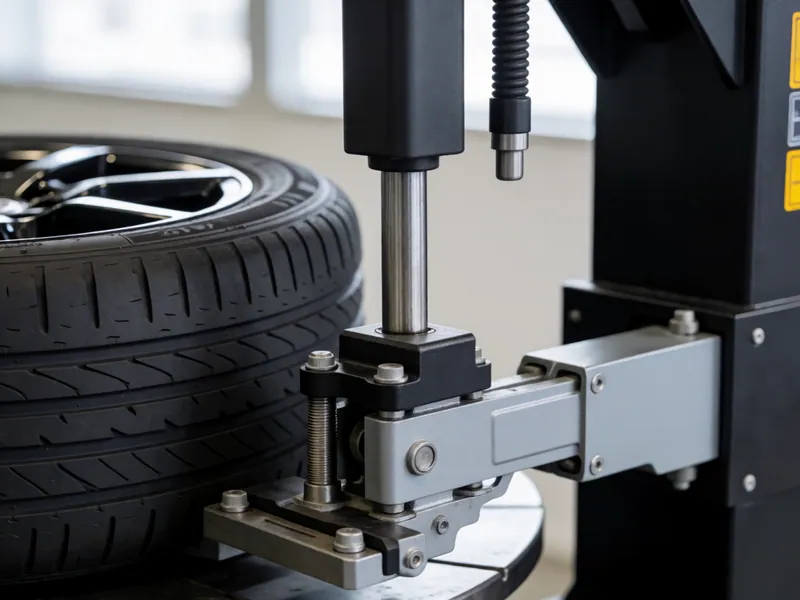
Tire Change
Dismount, mount, road-force balance, a new valve stem and a torque to specification, never an impact gun run to a stop, for $35 a wheel.
Read more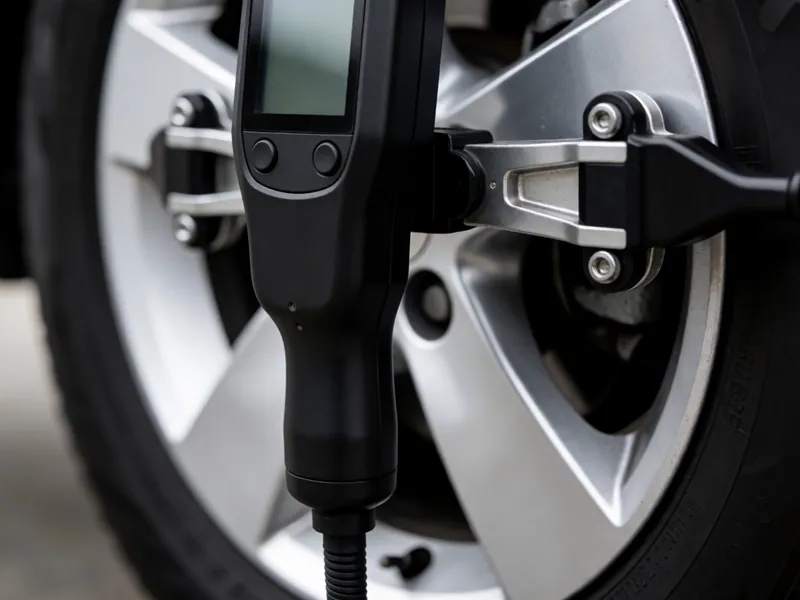
Tires & Wheels
Wheel Alignment
Four wheels measured against each other and against the manufacturer's own geometry, with a printed before-and-after figure whether or not adjustment was needed.
Read more
Tires & Wheels
Tire Repair
A patch-plug repair from the inside, done only where the damage sits inside the safe repair area, not a plug pushed in from outside.
Read moreA written estimate with photographs, before any work
Book your car in
Every car that comes in goes on a lift and gets a documented inspection before anything is priced, and that inspection is free. You get photographs of what we found and a line-by-line estimate on your phone, and nothing happens until you reply.