Where this work happens
A separate bay, for a genuine reason
From Toyota and Honda hybrids to Tesla and the battery-electric models of every marque we service, a car carrying a battery pack running at several hundred volts is a different hazard from anything else in a workshop, and it is worked on differently.
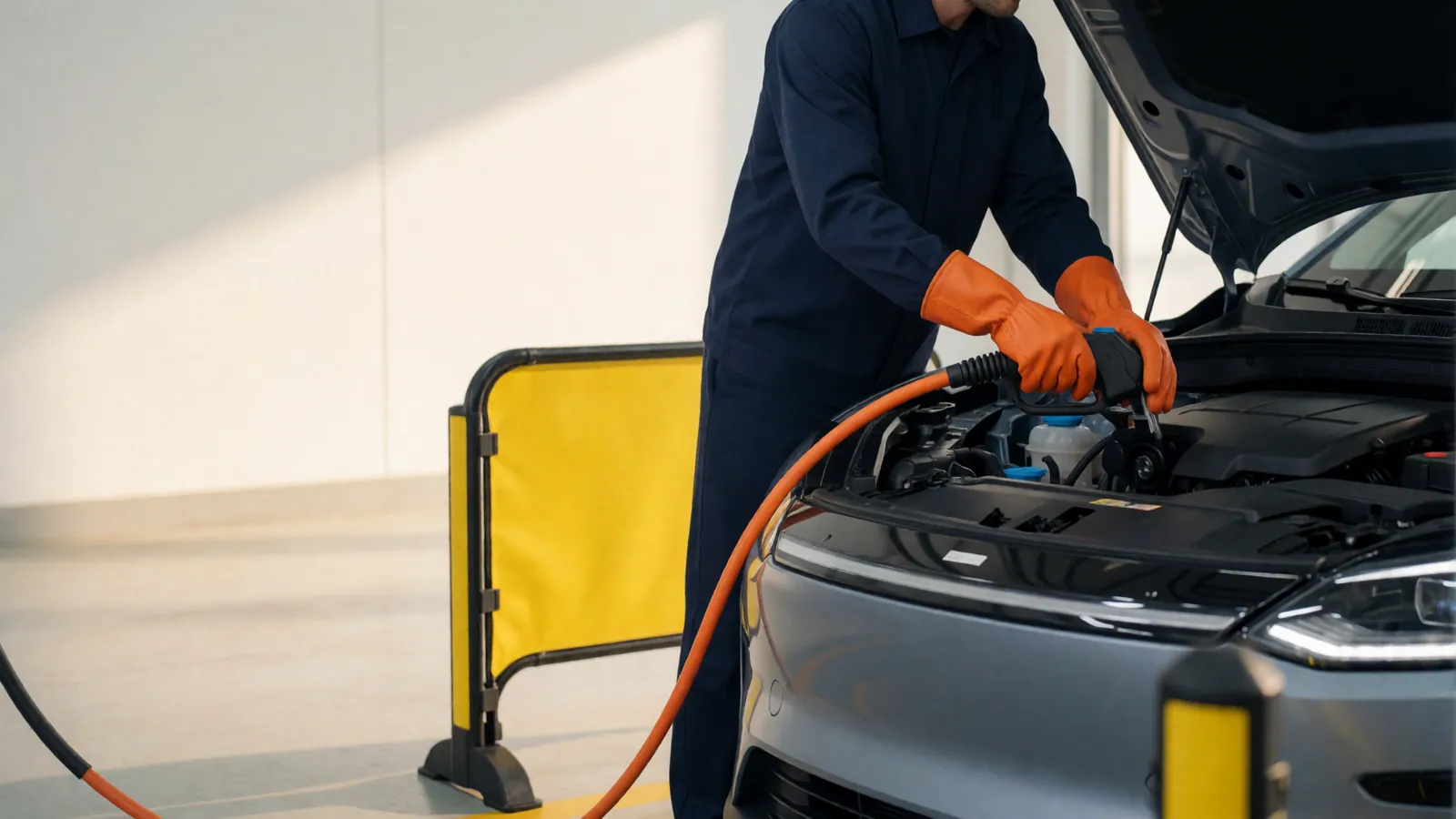
Ours is worked on in a physically separated, barriered bay with its own lock-out procedure, so it never happens beside somebody welding, grinding or running a lift on an unrelated car. The tooling is a separate, locked set rated to 1,000 volts, including insulating gloves that are pressure-tested on a schedule and retired rather than repaired. None of it is shared with the rest of the shop, and none of the rest of the shop's tooling comes anywhere near a live pack.
- Physically separated and barriered from the rest of the shop floor.
- Its own lock-out procedure before any cover comes off.
- Insulated tooling rated to 1,000 volts, on its own inspection schedule.
- Technicians hold current high-voltage safety qualifications, not a certificate from a decade ago.
What we take on
Most of a hybrid or EV is still a car
It is a smaller and more specialised list than most drivers expect, and it is worth knowing which side of the line each item falls on.
General servicing
Cabin and engine air filters, brake fluid, coolant, wiper blades and the usual inspection items. A hybrid or EV needs almost all of the same scheduled attention as any other car, on the same mileage or time-based intervals.
Brakes
Regenerative braking means the friction brakes do far less work than on a conventional car, so pads and rotors commonly outlast the tires several times over. The trap is the opposite of wear: calipers and pads used this rarely can seize or corrode from underuse, especially with road salt through a Queens winter, so we exercise and inspect them rather than assume low mileage means no attention needed.
Tires
A battery pack adds several hundred pounds over a comparable gasoline car, and instant electric torque puts that weight through the tires the moment you press the pedal. Both wear tires faster than drivers expect, and we set rotation intervals for EVs and hybrids shorter than for a conventional car for exactly that reason.
Suspension
The same added weight loads bushings, springs and dampers harder over time. We check these at every visit rather than waiting for a complaint, since the wear is gradual and easy to attribute to something else.
Twelve-volt systems
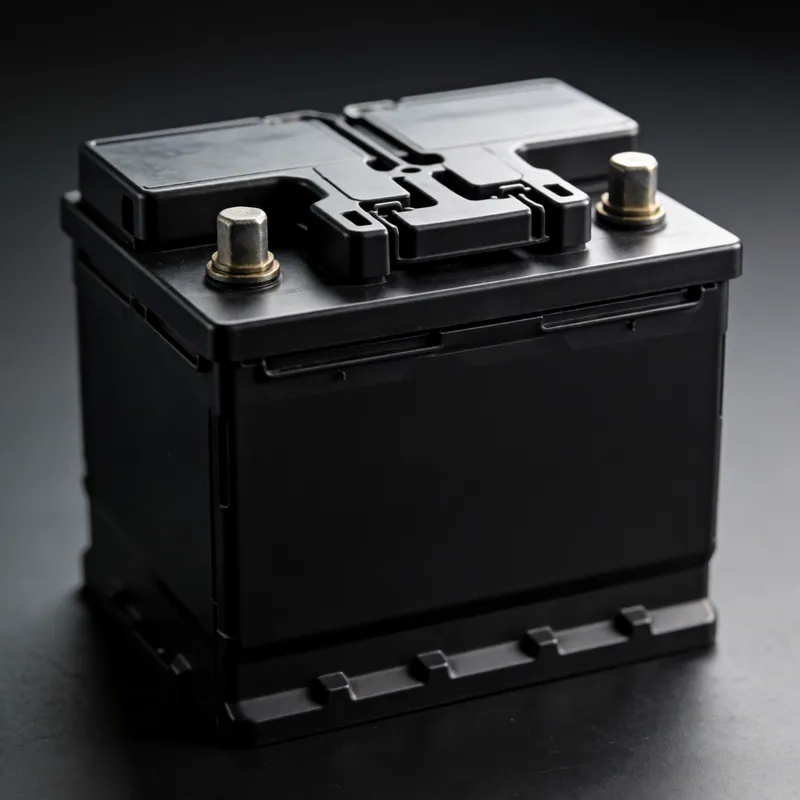
Every hybrid and EV still carries a conventional twelve-volt battery to run the contactors, computers and accessories that wake the high-voltage system up, and it remains the single most common reason any of these vehicles fails to start. We test it like we test any other car's battery, on every visit.
Cabin filters
Unaffected by what is under the hood or the floor. Same part, same interval, same ten-minute job.
Air conditioning and heat pump work
Many electric vehicles heat the cabin with a heat pump rather than resistance heat, because it uses a fraction of the battery's charge to do it. We service and diagnose these systems and the conventional AC side alongside them, with the same evacuate-and-recharge equipment we use on every other car.
Coolant loops
A hybrid or EV commonly runs more than one coolant loop — one for the engine if it has one, and a separate loop cooling the battery pack and the power electronics, which run hot under load and need to stay within a narrow temperature band. We maintain both to specification.
What we do not take on
What honestly belongs somewhere else
Three things we will tell you to take elsewhere, and tell you why rather than attempt them once.
Traction battery pack replacement
Swapping the high-voltage pack itself needs manufacturer-specific lifting equipment and software, and an investment that only makes sense for a shop doing it every week. We do not do this work, and we will tell you plainly where to take it rather than attempt it once.
Structural battery-case work
Where a pack enclosure has been damaged, usually in a collision, repairing it is a structural and safety question as much as an electrical one, and it belongs at a manufacturer-certified collision facility working to the specific repair procedure for that pack.
Anything under an active manufacturer battery warranty
Battery warranties commonly run for eight years or more, and the manufacturer already operates a dealer network that is both obliged to honour it and equipped to diagnose it at no cost to you. Our own 24-month, 24,000-mile warranty is a good one, but there is no reason to spend it duplicating cover you already have for free.
How the brakes actually work
Regenerative braking, in plain terms
Lift off the accelerator or press the brake pedal gently in a hybrid or EV, and the electric motor runs backwards, acting as a generator, converting the car's forward motion back into charge for the battery instead of into heat at the brake pads. That is regenerative braking, and it is why the friction brakes on these cars do so much less work than on a conventional car.
It has a limit, though. Hard braking, a low-speed final stop, and situations where the battery is already full all hand the job back to the conventional friction brakes, which is why those still need to work perfectly even though they are used so rarely — and why the underuse problem described above is a real one rather than a theoretical one.
This page is general information, not a diagnosis of your car. Nothing here can tell you whether a specific vehicle is safe to drive, because that needs somebody to look at it. Brakes, tires, steering and suspension are the systems that decide whether a car stops and goes where it is pointed, and a fault in any of them is not something to monitor for a few weeks and see. If the brake pedal has changed, if the steering pulls or feels loose, if a tire is losing pressure repeatedly, or if a warning lamp for any of these is lit, stop driving the car and call us on 000-000-0000 before you drive it further. High-voltage hybrid and electric systems carry a genuine risk of injury and are never work for an untrained person at the roadside.
We are an independent workshop. Woodside Car Service, LLC is an independent repair facility. We are not affiliated with, sponsored by, authorised by or a franchised dealer for any vehicle manufacturer. All manufacturer and model names are the trademarks of their respective owners and are used here only to describe the vehicles we service and repair.
High voltage, low guesswork
Book your hybrid or EV in
Tell us the make, model and what it is doing, and we will tell you honestly whether it is a job for us or a job for the dealer before you drive over.